
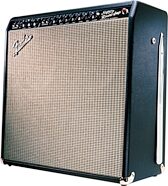
Fender '65 Super Reverb Vintage Reissue Guitar Combo Amplifier (40 Watts, 4x10")

zZounds Gear Experts Say...
A reissue of a '60s classic, this all-tube amp pushes 45 watts through 4x10" Jensen Alnico speakers with sweet tube-driven spring reverb and vibrato effects.
Overview
Every guitarist should have the chance to plug into a Fender '65 Super Reverb Vintage Reissue guitar combo amplifier. This amp not only produces the lush, classic tones that have appeared on thousands of legendary recordings over the last several decades -- it's also simply a joy to play with. In many ways, it's an instrument in its own right!
- Tube Vibrato
- 4 X 12AX7s
- 2 X 12AT7s
- 2 X 6L6s
- 1 X 5AR4 Rectifier
- 2-Button Footswitch
- Standby Switch
- Baltic Birch Plywood Cabinet
- 4 x 10 Jensen P-10R Alnico speakers
- Black Textured Vinyl
- Silver Grille Cloth
- 2-Button Footswitch (Reverb and Vibrato) Included
read less
Perfect Power Rating For Multiple Applications
At 45 watts (at 2 ohms), the Super Reverb is ideal for performing un-miked in small clubs or venues. It also mics up easily in live situations where you've got a bigger mix running to house mains. Above all, however, the '65 Super Reverb Vintage Reissue is beloved in the studio, where its manageable output power keeps it from hitting ear-damaging volumes. All the tone you need -- none of the volume you don't.The All-Tube Design of the Original Super Reverb
The Fender '65 Super Reverb Vintage Reissue is faithful to the specs of the original Super Reverb and reproduces the all-tube circuitry to the letter. Inside you'll find 2 x 6L6 Groove Tube output tubes, a 5AR4 rectifier tube, 4 x 12AX7 preamp tubes, and 2 x 12AT7 tubes. It might seem like more than enough tube for "only" 40 watts -- but as you delve further and further into its tonal capabilities, you'll come to appreciate this circuit design more and more.Two Footswitchable Channels
You'll find 4 instrument inputs on the front panel (2 x Normal and 2 x Vibrato), each connecting to its own foot-switchable channel.… read moreGlorious, Glorious Knobs
Tone tweaking controls are abundant on the '65 Super Reverb Vintage Reissue. On the Normal channel you'll find a Bright Switch, along with Volume, Treble, and Bass knobs. On the Vibrato channel you've got a Bright Switch as well, and Volume, Treble, Middle, Bass, and Reverb controls.Spring For It
The reverb on this amp is no joke -- it gives you the classic tube-driven Fender reverb tone that made these amps legendary to begin with! The Vibrato is tube-buffered as well, giving it a super warm and complex sound.The 4 x 10 Advantage
The Fender '65 Super Reverb gives moves its 40 watts evenly through the 4 x 10-inch 8-ohm Jensen P10R speakers with alnico magnets.Looks Cool as Hell
The styling on this baby is classic all the way, with black textured vinyl covering and a silver grille cloth. And for some reason, it looks twice as cool when you've got it sitting back on its tilt-back legs.Features:
- Tube-Driven Spring Reverb- Tube Vibrato
- 4 X 12AX7s
- 2 X 12AT7s
- 2 X 6L6s
- 1 X 5AR4 Rectifier
- 2-Button Footswitch
- Standby Switch
- Baltic Birch Plywood Cabinet
- 4 x 10 Jensen P-10R Alnico speakers
- Black Textured Vinyl
- Silver Grille Cloth
- 2-Button Footswitch (Reverb and Vibrato) Included
WARNING: Cancer and Reproductive Harm - www.p65Warnings.ca.gov.
Specs
Model Name: '65 Super Reverb
Model Number: 021-7600-000 (120V, 60Hz) USA
Series: Vintage Reissue Series
Type: All Tube Amp
Output: 45 watts into 2 ohms
Ohms: 2 ohms
Speakers: 4-10 in. Jensen P-10R, 8 ohm Speakers with AlNiCo Magnets
Channels: Dual Channels (Normal and Vibrato)
Controls:
Normal Channel: Bright Switch, Volume, Treble, Bass
Vibrato Channel: Bright Switch, Volume, Treble, Middle, Bass, Reverb,
Vibrato: Speed, Intensity
Covering: Black Textured Vinyl with Silver Grille Cloth
Weight: 65 lbs. (29.48 kg)
Dimensions:
Height: 24 7/8 in. (63.2 cm)
Width: 25 1/8 in. (63.8 cm)
Depth: 10 1/2 in. (26.7 cm)
Tube Complement:
4 X 12AX7
2 X 12AT7
2 X 6L6
1 X 5AR4 Rectifier
Cover: Uses Cover p/n 0041533000, (Not Included)
Accessories: Comes with 2-Button Footswitch for Reverb and Vibrato On/Off
Footswitch: Uses 2-Button Footswitch
Introduced: 1/2001
Notice: Product Prices, Features And Specifications Are Subject To Change Without Notice
Model Number: 021-7600-000 (120V, 60Hz) USA
Series: Vintage Reissue Series
Type: All Tube Amp
Output: 45 watts into 2 ohms
Ohms: 2 ohms
Speakers: 4-10 in. Jensen P-10R, 8 ohm Speakers with AlNiCo Magnets
Channels: Dual Channels (Normal and Vibrato)
Controls:
Normal Channel: Bright Switch, Volume, Treble, Bass
Vibrato Channel: Bright Switch, Volume, Treble, Middle, Bass, Reverb,
Vibrato: Speed, Intensity
Covering: Black Textured Vinyl with Silver Grille Cloth
Weight: 65 lbs. (29.48 kg)
Dimensions:
Height: 24 7/8 in. (63.2 cm)
Width: 25 1/8 in. (63.8 cm)
Depth: 10 1/2 in. (26.7 cm)
Tube Complement:
4 X 12AX7
2 X 12AT7
2 X 6L6
1 X 5AR4 Rectifier
Cover: Uses Cover p/n 0041533000, (Not Included)
Accessories: Comes with 2-Button Footswitch for Reverb and Vibrato On/Off
Footswitch: Uses 2-Button Footswitch
Introduced: 1/2001
Notice: Product Prices, Features And Specifications Are Subject To Change Without Notice
Dimensions and Weight in Packaging
Base Item
- Shipping Weight: 72.75 lbs
- Shipping Dimensions: 30 x 30 x 15 in
- Manufacturer Part Number (MPN): 0217600000
Documents and Manuals
For support or warranty questions, please contact the manufacturer:
Phone: 800-488-1818
Web: https://my.fender.com/support
Phone: 800-488-1818
Web: https://my.fender.com/support
Fender's Description
Fender Reissue '65 Super Reverb Amp
This faithful recreation of the legendary Blackface Super from the 1963-1968 era is a must-have for vintage enthusiasts and Strat guitar slingers, but players of all styles enjoy its shimmering tone. The 45-watt (at 2 ohms) Super Reverb amp's medium output and stage-filling sound makes it the perfect amp to crank up for unmiked club gigs or on a concert stage.Features include a pair of 6L6 Groove Tube output tubes, 1 x 5AR4 rectifier tube, 4 x 12AX7 preamp tubes, 2 x 12AT7 tubes, 4 x 10 in. 8-ohm Jensen P10R speakers with alnico magnets, dual channels (normal and vibrato), tube-driven Fender reverb, tube vibrato, 2-button footswitch for reverb and vibrato on-off, black textured vinyl covering with silver grille cloth, and tilt-back legs.
Features:
- Tube Driven Spring Reverb- Tube Vibrato
- 2-Button Footswitch
- Standby Switch
- Baltic Birch Plywood Cabinet
- Jensen P-10R Alnico speakers
- All-tube design
Reviews
Reviewers gave this product an overall rating of 5 out of 5 stars.
(92 ratings)
Submitted May 10, 2015 by JERRY L in BERTHOUD, CO
"GREAT AMP !!!! GREAT TONES !!!! LOVE THIS AMP !!!! "
Verified Purchaser
zZounds has verified that this reviewer purchased this specific product from us.
I was looking for something to replace my Fender Dual Showman I was suggested that I try one of these. I was greeted by a very full, clean sounding amp. with plenty of stage volume. Plays very well and looks very cool on stage as well. I LIKED THIS AMP SO WELL I BOUGHT A SECOND ONE !!!
Sound
Very clean, has more than enough volume to fill the stage, Full sounding amp with lots of punch, the 4-10 Jensen P10R give this amp a nice full sound that is an advatage over single and dual speaker amps
Features
Love the Reverb but still Prefer my 1962 Fender Reverb tank when playing Surf also like the Vibrato channel as well,
Ease of Use
Very easy for me I play alot of Surf and instrumentals, easy to use with my other products as well, as for learning curve this amp is as easy as it gets
Quality
The Amp seems to be made very well hopefully without a doubt if this amp is built like the old ones should outlast me LOL
Value
Well we would all like to see the products that we buy for less. But when something this fun and great sounding comes along we forget about that factor and just buy it as I did
Manufacturer Support
Have never had to contact Fender with this amp have had to with a Fender 1994 " Red Knob Twin " back in the 1990's and they resolved the problem with that amp very fast and good service… read more
The Wow Factor
I am very WOW I'd by this amp Due to that it won't break my back everytime I gotta play a show My dual Showman weighed in at 80 lbs. on the speaker cab and 40 lbs on the head so the Super reverb is also a back saver too at just 65lbs.
Musical Background:
PLAYING FOR 30+ YEARS, SEMI PRO
Musical Style:
INSTRUMENTAL SURF ROCK read less
Sound
Very clean, has more than enough volume to fill the stage, Full sounding amp with lots of punch, the 4-10 Jensen P10R give this amp a nice full sound that is an advatage over single and dual speaker amps
Features
Love the Reverb but still Prefer my 1962 Fender Reverb tank when playing Surf also like the Vibrato channel as well,
Ease of Use
Very easy for me I play alot of Surf and instrumentals, easy to use with my other products as well, as for learning curve this amp is as easy as it gets
Quality
The Amp seems to be made very well hopefully without a doubt if this amp is built like the old ones should outlast me LOL
Value
Well we would all like to see the products that we buy for less. But when something this fun and great sounding comes along we forget about that factor and just buy it as I did
Manufacturer Support
Have never had to contact Fender with this amp have had to with a Fender 1994 " Red Knob Twin " back in the 1990's and they resolved the problem with that amp very fast and good service… read more
The Wow Factor
I am very WOW I'd by this amp Due to that it won't break my back everytime I gotta play a show My dual Showman weighed in at 80 lbs. on the speaker cab and 40 lbs on the head so the Super reverb is also a back saver too at just 65lbs.
Musical Background:
PLAYING FOR 30+ YEARS, SEMI PRO
Musical Style:
INSTRUMENTAL SURF ROCK read less
36 of 38 people (95%) people found this review helpful. Did you?
Thanks for your opinion!
New
$2,299.99
- 12 payments of$191.67/mo
FREE
-Day
Shipping!
Get it
for
Get it
(or get it
with an order of
),
if you order within
Shipping to
This is a carousel with product cards. Use the previous and next buttons to navigate.
Related Accessories
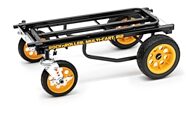
RocknRoller Multi-Cart Equipment Cart with R-Trac Wheels
$329.98
- No Credit Check6 payments of$33.33/mo
-


This is a carousel with product cards. Use the previous and next buttons to navigate.
Related Accessories
-
-
-
RocknRoller Multi-Cart Equipment Cart with R-Trac Wheels
$329.98
- No Credit Check6 payments of$33.33/mo
-
-
-
-
-
This is a carousel with product cards. Use the previous and next buttons to navigate.
People who bought this item also bought
Gibson Custom Les Paul Axcess Figured Top Electric Guitar (with Case)
$5,799.00
- Interest-Free Payment Plans
-
PRS Paul Reed Smith S2 Custom 24-08 Electric Guitar (with Gig Bag)
$2,349.00
- 12 payments of$195.75/mo
-
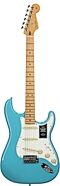
Fender Player II Stratocaster Electric Guitar, with Maple Fingerboard
$849.99
- 12 payments of$70.83/mo
- No Credit Check6 payments of$141.66/mo
-
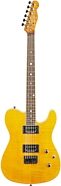
Fender Custom Telecaster FMT HH Electric Guitar, with Laurel Fingerboard
$1,149.99
- 12 payments of$95.83/mo
- No Credit Check6 payments of$191.66/mo
-
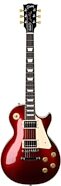
Gibson Les Paul Standard '50s Custom Color Electric Guitar, Plain Top (with Case)
$2,199.00
- 12 payments of$183.25/mo
-
Items You Recently Viewed
Fender '65 Super Reverb Vintage Reissue Guitar Combo Amplifier (40 Watts, 4x10")
$2,299.99
- 12 payments of$191.67/mo
-