
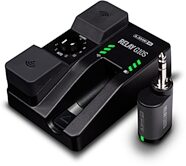
Line 6 Relay G10S Guitar Wireless System with G10TII Transmitter
Line 6's wireless rig is better than ever -- with the G10TII plug-on transmitter for up to 7 hours of playing time, and a receiver made for your pedalboard.
$199.99
- No Credit Check6 payments of$33.33/mo
Line 6 Relay G30 Digital Wireless Guitar System
No longer available at zZounds
zZounds Gear Experts Say...
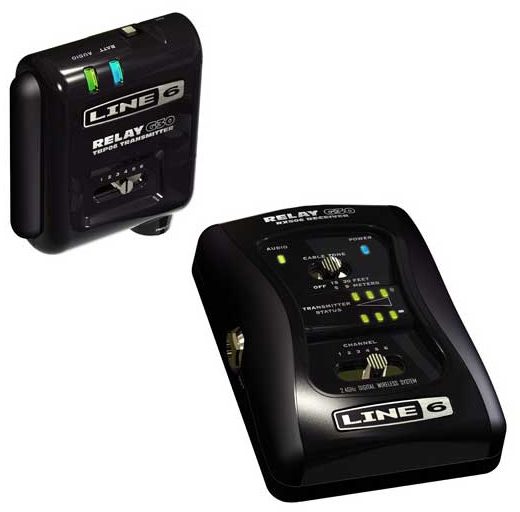
Break free from your amp and pedalboard -- and rock out without tripping over your cable -- with the low-profile Relay G30 digital wireless guitar system.
Overview
Unleash yourself from your amplifier and pedalboard with Line 6's Relay G30 digital wireless guitar system. Unlike analog wireless systems which are notorious for flattening and sucking the energy out of tone, the Relay G30 digital wireless system delivers a full-bandwidth, uncompressed 24-bit digital signal. The G30 preserves the full 118 dB dynamic range of your guitar or bass over a wide 10 Hz to 20 kHz frequency range, so nothing gets lost in translation. Plus, the DSP modeling experts at Line 6 have even added a "Cable Tone" switch to simulate the impedance of a 15-foot or 30-foot guitar cable. Factor in this system's small size and nice price, and the Line 6 Replay G30 is a no-brainer for guitarists looking to go wireless.
- Full-bandwidth, uncompressed 24-bit digital signal
- 118 dB dynamic range and 10 Hz to 20 kHz frequency range
- 100-foot line-of-sight operating range
- 8-hour battery life with two AA batteries
- Low-profile, easy-to-transport design read less
Preserve Your Tone with 24-Bit Digital Signal
When guitarists go wireless, they typically miss the great tone afforded by an analog instrument cable. Older analog VHF or UHF wireless systems typically sound less dynamic than audio cables, since they use a process called companding, or compression and expansion, to fit into the frequency on which they're transmitting. The Relay G30 wireless system bypasses the tone-sucking, dynamics-squashing companding process by transmitting a full 24-bit wireless signal. Line 6's exclusive DCL (Digital Channel Lock) technology uses digital handshake technology to make the connection from receiver to transmitter.Cable Tone Simulation from the Guitar-Modeling Experts
When you plug into a guitar amplifier… read more or pedalboard with an analog cable, your tone is affected by the impedance of that cable. So if you've dialed in your amp's tone settings while plugged in, you may notice your wireless system sounding a little too bright or present in comparison. Take the edge off your tone, and add the sound of your cable back into the mix with the Line 6 Relay G30's built-in cable tone simulator. Just flip the Cable Tone switch on the receiver to put Line 6's DSP expertise to work modeling the sound of a 15-foot or 30-foot analog cable.Roadworthy and Easy to Transport
How easy is it to transport the Line 6 Relay G30? The transmitter fits easily in a pocket, and the receiver is about the same size as a guitar pedal. In fact, you can mount the receiver inconspicuously in your pedalboard. The Line 6 Relay G30 is made out hard polycarbonate material making it more than roadworthy. Pop two AA batteries into the transmitter for up to 8 hours of battery life.Features:
- 2.4 GHz digital wireless system with Digital Channel Lock- Full-bandwidth, uncompressed 24-bit digital signal
- 118 dB dynamic range and 10 Hz to 20 kHz frequency range
- 100-foot line-of-sight operating range
- 8-hour battery life with two AA batteries
- Low-profile, easy-to-transport design read less
Specs
Polycarbonate Stompbox-style System
- Transmission Format: Line 6 proprietary digital audio transmission
- Frequency Response: 10Hz - 20kHz
- Dynamic Range: 118 dB
- RF Carrier Frequency: 2.4 GHz
- Compatible Channels: 6
- Transmission Range: 100 feet line-of-sight (may vary due to local conditions)
- FCC Approval: Part 15 approved, no user-license required
TBP06 Transmitter
- A/D Conversion: 24-bit Delta Sigma, 128 times oversampling
- Input Impedance: 1.3 M-Ohm
- Connectors: 1/4-inch unbalanced input
- Controls: Power On/Off, Channel Select
- LEDs Display: Power, Audio Status
- Battery Life: Approx. 8 hours (2x AA alkaline batteries)
RXS06 Receiver
- D/A Conversion: 24-bit Delta Sigma, 128 times oversampling
- Connections: 1/4-inch output
- LEDs Display: Power On, Data Link, Audio Status
Controls:
- Power On/Off
- Channel Select
- Cable Tone Simulator
Power Requirements: DC-1g power supply (9VDC)
- Transmission Format: Line 6 proprietary digital audio transmission
- Frequency Response: 10Hz - 20kHz
- Dynamic Range: 118 dB
- RF Carrier Frequency: 2.4 GHz
- Compatible Channels: 6
- Transmission Range: 100 feet line-of-sight (may vary due to local conditions)
- FCC Approval: Part 15 approved, no user-license required
TBP06 Transmitter
- A/D Conversion: 24-bit Delta Sigma, 128 times oversampling
- Input Impedance: 1.3 M-Ohm
- Connectors: 1/4-inch unbalanced input
- Controls: Power On/Off, Channel Select
- LEDs Display: Power, Audio Status
- Battery Life: Approx. 8 hours (2x AA alkaline batteries)
RXS06 Receiver
- D/A Conversion: 24-bit Delta Sigma, 128 times oversampling
- Connections: 1/4-inch output
- LEDs Display: Power On, Data Link, Audio Status
Controls:
- Power On/Off
- Channel Select
- Cable Tone Simulator
Power Requirements: DC-1g power supply (9VDC)
Line 6's Description
Line 6 Relay G30 Wireless Guitar System
Redefining wireless for bass and guitarists, Line 6's Relay G30 quite simply offers more than you can get from other wireless systems. Front-lining the wireless revolution, Line 6 proudly ushers in a better-sounding and more dependable era of wireless guitar systems, inspiring you to explore different areas of your music and the stage.Features:
- 100-foot line-of-sight range- 6 User-Selectable channels
- Broad 10Hz-20kHz frequency response
- Superior 118 dB dynamic range
- 8 hours of battery life (AA alkaline batteries)
- Lightweight, low-profile and easy to use
- Bright LEDs display power, status and battery life
- EQ switch provides guitar cable frequency response
- 2.4 GHz band is optimal for guitar wireless
- Encrypted data stream for added signal protection
- Simultaneous broadcasting on six channels
- Rugged polycarbonate shell
- Includes transmitter, receiver cable, power supply and batteries
Superior Sound
Relay G30 provides a pure signal. Its clarity rivals that of the highest-quality guitar cables. Guitars get a beautiful high-end sparkle and basses get a thunderous low-end punch, even at distances of up to 30 meters. Traditional wireless systems compromise their sound by rolling-off crucial high- and low-end frequencies and compressing their signals. Relay G30 offers superior sound with full bandwidth and zero compression.Professional Dependability
Relay G30 broadcasts its robust signal over the 2.4 GHz band. This keeps the signal free from many kinds of interference, For added security, Relay G30 employs exclusive signal protection technology: it broadcasts an encrypted data stream on six channels simultaneously,Traditional wireless systems, on the other hand, are susceptible to dropouts, static and many other kinds of interference, Broadcasting over congested UHF bands, their signals may be affected by interference generated as far away as 160 kilometers, or more.
Refreshing Simplicity
Relay G30 is a low-profile system that's easy to use. The lightweight transmitter remains out of the way of your performance, and the rugged receiver can sit on top of your amp or be added to your pedal board. The receiver offers bright and easy-to-read LEDs that display power, status and battery life And the standard 1/4-inch ins and outs deliver real convenience.The system comes complete with transmitter, receiver and all necessary accessories including cable, power supply and batteries.
Attached to Your Guitar Cable?
For players attached to cables, adopting a wireless system introduces many questions: What will it feel like? Will it change my sound? Relay G30 sounds just like a cable, but it also sounds just like your cable. Relay G30 features two EQ settings that match the frequency responses of typical guitar cables. Different players use different cables, but all players can use Relay G30.Reviews
Reviewers gave this product an overall rating of 5 out of 5 stars.
(35 ratings)
Submitted March 25, 2010 by a customer from aol.com
"Amazing!"
Verified Purchaser
zZounds has verified that this reviewer purchased this specific product from us.
I was very pleased with the G30 and i will be keeping this product for many years to come...I will recommened that you get rechargable batteries though. Even though they last for 8 hours, you will be going through lots of money buying batteries
Sound
Wonderfull sound! i was expecting that it would take away the sound from my amp, but it didn't! I was playing in the other room, upstairs, and even outside and my tone wasn't affected (until i went over the range) i was very suprised that the tone sounded just like using wires!
Features
Cable tone switches, battery life, channel selector, power source, etc. Everything that you would need for a wireless system
Ease of Use
Plug it in and play! It's as easy as that!
Quality
My only worry about the G30 is that the reciever is made out of plastic. Even though it seems that it would hold up, i am still worried. If you take care of your gear though, you won't have a problem with the G30
Value
Great product for the money! if someone stole this i would definately buy another one in a heartbeat
Manufacturer Support
N/A
I've never had to deal with Line 6, but my guess is that they would be right there for you
The Wow Factor
Who doesn't want a wireless!?! You get the wireless freedom that you've been wanting without sacrificing the tone of your amp
Musical Background:
Active Musician
Musical Style:
Rock, Metal, Punk
59 of 62 people (95%) people found this review helpful. Did you?
Thanks for your opinion!
No longer available at zZounds
This is a carousel with product cards. Use the previous and next buttons to navigate.
Related Accessories
D'Addario NYXL Nickel Wound Electric Guitar Strings
$12.99Comes in 3 Quantities, 14 String Gauges, 14 Mfg Models


This is a carousel with product cards. Use the previous and next buttons to navigate.
Related Accessories
-
D'Addario NYXL Nickel Wound Electric Guitar Strings
$12.99Comes in 3 Quantities, 14 String Gauges, 14 Mfg Models
This is a carousel with product cards. Use the previous and next buttons to navigate.
People who bought this item also bought

Line 6 Helix Stadium XL Floor Multi-Effects Processor Pedal
$2,199.99
- 12 payments of$183.33/mo
Comes in 2 Case/Bag Options-

Line 6 Helix Floor Amp and Effects Processor
$1,399.99
- 12 payments of$116.67/mo
Comes in 2 Case/Bag Options-
Sennheiser EW IEM G4 Wireless In-Ear Monitor System
$1,249.00
- 12 payments of$104.08/mo
- No Credit Check6 payments of$208.17/mo
Comes in 3 Frequencies-

Gibson Les Paul Studio Electric Guitar (with Soft Case)
$1,599.00
- 18 payments of$88.83/mo
Comes in 6 Colors-
Xvive U45 5.8 GHz Digital Wireless In-Ear Monitor System
$269.99
- No Credit Check6 payments of$45.00/mo
Comes in 2 Colors-
Shure SLXD24D+/SM58 Dual-Channel Wireless System with Two SM58 Handheld Microphones
$1,649.00
- 12 payments of$137.42/mo
-
HeadRush Prime Amp Modeler and Vocal Processor Multi-Effects Pedal
$999.00
- 12 payments of$83.25/mo
- No Credit Check6 payments of$166.50/mo
-
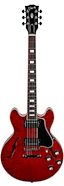
Gibson ES-339 Figured Electric Guitar (with Case)
$3,499.00
- 18 payments of$194.39/mo
Comes in 3 Colors-

Electro-Voice ELX200-18SP Powered Subwoofer Speaker (1200 Watts)
$1,099.00
- 12 payments of$91.58/mo
- No Credit Check6 payments of$183.17/mo
Comes in 2 Quantities, 2 Colors-
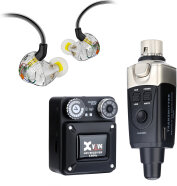
Xvive U45T9 5.8 GHz Digital Wireless In-Ear Monitor System with T9 Earphones
$459.99
- 8 payments of$57.50/mo
- No Credit Check6 payments of$76.66/mo
Comes in 2 Colors-