

THD BiValve30 Guitar Amplifier Head (30 Watts)
No longer available at zZounds
Overview
THD BiValve30 bring all players of every style of music the absolute best in tonal diversity.
With the ability to change out every tube in the signal path to suit your liking, the BiValve30 is so versatile, every passionate guitarist needs one of these. Featuring warning LEDs showing if a tube is not operational as well as a lightbulb that glows as the amp distorts. Very hip. Pick one of these tone factories up today.
The BiValve is a single-ended pure Class A design. It has two output valves which are wired in parallel and combined through a special output transformer to deliver up to around 30 watts. You can use almost any output valve you like without touching any kind of bias adjustment, and get this: in the BiValve you can use them in any combination as well. Combined with the capability to take almost any preamp valve, this makes the BiValve even more of an amp-tweakers dream than its predecessor. Because there's such a wide range of tone available you your style.
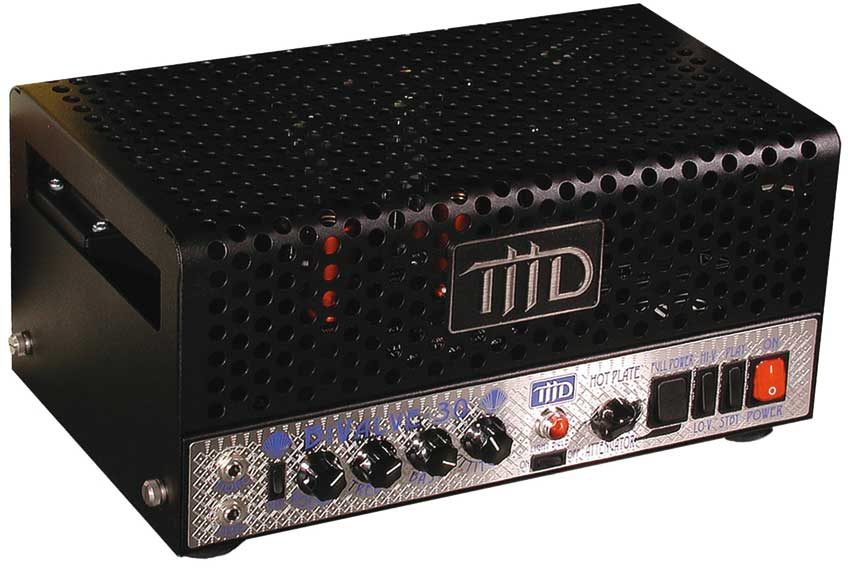
The BiValve sits in the same compact pressed steel chassis as the UniValve and, except for the extra valve and control plate, it looks almost identical. The UniValve's acid-etched control plate was inspired by Glasgow artist Charles Rennie Mackintosh; this time round THD have gone for a marine theme, with an intricate diamond scale design. The control markings are screen printed, which makes them easier to see, but in our opinion detracts a little from the artistry of the background pattern.
Underneath the… read more perforated steel lid there's a larger pair of transformers to handle the increased output, and inside there are two ultra-thick PCBs: one for the power supply and one for the audio. The four valve bases are bolted to the chassis and secured by locking nuts, with hi-fi style internal baffle plates to cut down on radiated hum. The standard of construction is absolutely top class. THD are based in Seattle, which is also home town to Boeing, and most of the BiValve's heavy fabrication work is contracted out to local specialist companies who service the aircraft industry. So now you know.
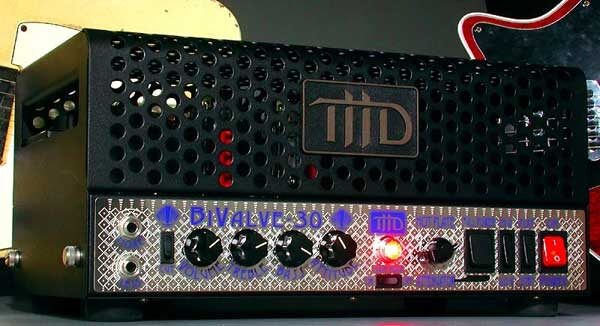
The front panel looks deceptively simple. Working from the left, there's a pair of input jacks labelled 'more' and 'less', followed by a treble cut switch then rotary controls for volume, treble, bass and what THD call 'Attitude'. It's not a fancy name for a presence control - there's no negative feedback loop - instead Attitude works on the driver valve to change its response, and does more or less what the name suggests: either smoothing things out or making them more aggressive.
In the centre, part of a clever noise reduction circuit, is a light bulb that glows as the amp distorts. Next to this is the level control for the Hot Plate - a built-in output attenuator that lets you run the BiValve into total meltdown without annoying the neighbours; there's also a defeat switch for this function, which adds a little extra volume for live work.
The last three rocker switches are for mains, standby and power selection. The hi/lo power switch is like having a built-in Variac; switching to low voltage adds a squashy dynamic feel and reduces clean headroom, and it's essential for valves like the 6V6 which can't handle high plate voltages.
The BiValve's back panel is also similar to its smaller cousin. There's a pair of speaker outlets with an impedance changer, and the excellent transformer-isolated line out - using a 6mm stereo jack socket - is now balanced. Fuse protection is more comprehensive, and the BiValve also benefits from a pair of warning LEDs to let you know if a power valve is faulty.
Using the volume control in conjunction with the two inputs you can cover the whole gain spectrum, from squeaky clean to absolute brainfrying power-amp distortion with almost infinite sustain, and all the time the BiValve stays totally musical. Even at full-tilt you can still pick out each string within a chord, and the tone controls seem to have just the right range, whatever valves are in use.
The Hot Plate feature lets you play any distortion tone at any volume level. You can even disconnect the speakers for recording, as the amp has a built-in dummy load. We lost count of the different valve combinations we tried but a few really stood out. A 6V6 with an EL34 yielded one of the absolute best British blues/rock sounds ever heard. The smaller valve works to balance out the EL34's hollow midrange and aggressive distortion with a unique high-end response - somewhere between the best vintage Marshall and tweed Fenders, with a hint of AC30 thrown in.
As you'd expect, the BiValve is much louder than the UniValve. There's more than enough headroom for live use, and notes seem to jump out of the loudspeakers a lot quicker. It's a different effect to the UniValve's threedimensional warmth, but but it is equally rewarding.
VERDICT:
The BiValve delivers totally on the UniValve's promise of more to come, and the result is one of the best playing experiences any guitarist could hope for. Tough construction, ultra-hip styling and a unique collection of features add up to an amp you'll probably never tire of playing through. The best things in life are rarely cheap, and the BiValve is definitely an amp for the well-heeled purist - no footswitches to change channels means you have to use it the oldfashioned way, driving things from the guitar. But you can have so much fun defining your sound and then playing it that even the most die-hard tap-dancer could be converted by this amp. Talk about having your cake and eating it - here's one of the few amps that lets you do both. read less
With the ability to change out every tube in the signal path to suit your liking, the BiValve30 is so versatile, every passionate guitarist needs one of these. Featuring warning LEDs showing if a tube is not operational as well as a lightbulb that glows as the amp distorts. Very hip. Pick one of these tone factories up today.
The BiValve is a single-ended pure Class A design. It has two output valves which are wired in parallel and combined through a special output transformer to deliver up to around 30 watts. You can use almost any output valve you like without touching any kind of bias adjustment, and get this: in the BiValve you can use them in any combination as well. Combined with the capability to take almost any preamp valve, this makes the BiValve even more of an amp-tweakers dream than its predecessor. Because there's such a wide range of tone available you your style.
The BiValve sits in the same compact pressed steel chassis as the UniValve and, except for the extra valve and control plate, it looks almost identical. The UniValve's acid-etched control plate was inspired by Glasgow artist Charles Rennie Mackintosh; this time round THD have gone for a marine theme, with an intricate diamond scale design. The control markings are screen printed, which makes them easier to see, but in our opinion detracts a little from the artistry of the background pattern.
Underneath the… read more perforated steel lid there's a larger pair of transformers to handle the increased output, and inside there are two ultra-thick PCBs: one for the power supply and one for the audio. The four valve bases are bolted to the chassis and secured by locking nuts, with hi-fi style internal baffle plates to cut down on radiated hum. The standard of construction is absolutely top class. THD are based in Seattle, which is also home town to Boeing, and most of the BiValve's heavy fabrication work is contracted out to local specialist companies who service the aircraft industry. So now you know.
The front panel looks deceptively simple. Working from the left, there's a pair of input jacks labelled 'more' and 'less', followed by a treble cut switch then rotary controls for volume, treble, bass and what THD call 'Attitude'. It's not a fancy name for a presence control - there's no negative feedback loop - instead Attitude works on the driver valve to change its response, and does more or less what the name suggests: either smoothing things out or making them more aggressive.
In the centre, part of a clever noise reduction circuit, is a light bulb that glows as the amp distorts. Next to this is the level control for the Hot Plate - a built-in output attenuator that lets you run the BiValve into total meltdown without annoying the neighbours; there's also a defeat switch for this function, which adds a little extra volume for live work.
The last three rocker switches are for mains, standby and power selection. The hi/lo power switch is like having a built-in Variac; switching to low voltage adds a squashy dynamic feel and reduces clean headroom, and it's essential for valves like the 6V6 which can't handle high plate voltages.
The BiValve's back panel is also similar to its smaller cousin. There's a pair of speaker outlets with an impedance changer, and the excellent transformer-isolated line out - using a 6mm stereo jack socket - is now balanced. Fuse protection is more comprehensive, and the BiValve also benefits from a pair of warning LEDs to let you know if a power valve is faulty.
Using the volume control in conjunction with the two inputs you can cover the whole gain spectrum, from squeaky clean to absolute brainfrying power-amp distortion with almost infinite sustain, and all the time the BiValve stays totally musical. Even at full-tilt you can still pick out each string within a chord, and the tone controls seem to have just the right range, whatever valves are in use.
The Hot Plate feature lets you play any distortion tone at any volume level. You can even disconnect the speakers for recording, as the amp has a built-in dummy load. We lost count of the different valve combinations we tried but a few really stood out. A 6V6 with an EL34 yielded one of the absolute best British blues/rock sounds ever heard. The smaller valve works to balance out the EL34's hollow midrange and aggressive distortion with a unique high-end response - somewhere between the best vintage Marshall and tweed Fenders, with a hint of AC30 thrown in.
As you'd expect, the BiValve is much louder than the UniValve. There's more than enough headroom for live use, and notes seem to jump out of the loudspeakers a lot quicker. It's a different effect to the UniValve's threedimensional warmth, but but it is equally rewarding.
VERDICT:
The BiValve delivers totally on the UniValve's promise of more to come, and the result is one of the best playing experiences any guitarist could hope for. Tough construction, ultra-hip styling and a unique collection of features add up to an amp you'll probably never tire of playing through. The best things in life are rarely cheap, and the BiValve is definitely an amp for the well-heeled purist - no footswitches to change channels means you have to use it the oldfashioned way, driving things from the guitar. But you can have so much fun defining your sound and then playing it that even the most die-hard tap-dancer could be converted by this amp. Talk about having your cake and eating it - here's one of the few amps that lets you do both. read less
No longer available at zZounds
In most cases, a product is unavailable because it has been discontinued by the manufacturer
This is a carousel with product cards. Use the previous and next buttons to navigate.
People who bought this item also bought
Orange PPC212-OB Guitar Speaker Cabinet (120 Watts, 2x12")
$699.00
- 12 payments of$58.25/mo
- No Credit Check6 payments of$116.50/mo
-
Orange PPC112 Guitar Speaker Cabinet (60 Watts, 1x12")
$449.00
- 8 payments of$56.13/mo
- No Credit Check6 payments of$74.83/mo
-
Marshall MX412AR Guitar Speaker Cabinet (4x12", 240 Watts, 16 Ohms)
$599.99
- 12 payments of$50.00/mo
- No Credit Check6 payments of$100.00/mo
-
EVH Eddie Van Halen 5150 Iconic Series Guitar Speaker Cabinet (160 Watts, 4x12")
$679.99
- 12 payments of$56.67/mo
- No Credit Check6 payments of$113.33/mo
-
Orange PPC212 Guitar Speaker Cabinet (120 Watts, 2x12")
$1,099.00
- 12 payments of$91.58/mo
- No Credit Check6 payments of$183.17/mo
-
Orange Crush Pro 4x12 Guitar Speaker Cabinet (240 Watts)
$799.00
- 12 payments of$66.58/mo
- No Credit Check6 payments of$133.17/mo
-

Boss Katana 212 Waza Guitar Speaker Cabinet (160 watts, 2x12")
$689.99
- 12 payments of$57.50/mo
- No Credit Check6 payments of$115.00/mo
-
PRS Archon Closed Back Cab Stealth (2x12", 140 Watts)
$599.00
- 12 payments of$49.92/mo
- No Credit Check6 payments of$99.83/mo
-
Marshall Studio Silver Jubilee 2536A Guitar Speaker Cabinet, Angled (140 Watts, 2x12")
$899.99
- 12 payments of$75.00/mo
- No Credit Check6 payments of$150.00/mo
-