
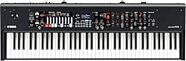
Yamaha YC73 Stage Keyboard, 73-Key
Get electric piano style key action and rich sounds with the YC73, a keyboard that authentically replicates acoustic piano, drawbar organ, synths, and more.
$2,699.99
- 12 payments of$225.00/mo
Overall User Ratings (based on 2 ratings)
Submitted December 13, 2023 by a customer from verizon.net
"The "Nord Killer" at a fraction of the price."
Verified Customer
zZounds has verified that this reviewer made a purchase from us.
Juicy Electric Rhodes and Wurlitzer Pianos, Realistic and useful acoustic pianos...Organ H1,2,3 , Farfisa, Church organ sounds!!! 9 bars to slide for getting the organ sounds you desire! The keybed is awesome! Firmware 1.2 and 1.3 were a gamechanger for this Piano. 1.2 and 1.3 brought in more Piano sounds and fixed the Leslie speaker emulation that people 2 years ago were complaining about. It is now spot on and sublime! I bought this Yamaha YC 73 after several reviews and comparisons on YouTube. There were several hours spent in Guitar Center playing all the Nords in there. I couldn't pull the trigger on them because I just didnt like them. Buy this Yamaha YC and you will be glad you did! You won't be returning this one! I feel like the Nerd that scored a date with the prom queen everytime I play on it!
11 of 11 people (100%) people found this review helpful. Did you?
Thanks for your opinion!
Submitted March 20, 2026 by Jesse J in Bethel, OH
"Yamaha YC73 Review – Real-World First Impressions from a Gigging Player"
Verified Purchaser
zZounds has verified that this reviewer purchased this specific product from us.
I wanted to give an honest, real-world review of the Yamaha YC73 after actually using it in live situations—not just unboxing it and playing around for a few minutes. Within the first couple of days, I used it at a bar gig and then at a wedding, so this is coming from actual experience in the field.
---### Overall Impression This is a professional instrument. It’s not a toy, and it’s not something you fully understand in five minutes—but it is something you can start using very quickly. There’s a learning curve, but it rewards you almost immediately.
---### Keybed (BHS – Balanced Hammer Standard)This is hands-down my favorite feature.When I first took it out of the box and played it sitting on the bed, I wasn’t sure. But once I actually got it hooked up and played for real, it completely clicked.The balanced hammer action is phenomenal. It feels smooth and fast, and I can glide across it without having to dig in or fight the keys. What really surprised me is how well it works for both piano and organ playing. That’s not something you usually get.I actually prefer this over graded hammer action now.
---### Sound QualityOut of the box, the sounds are good—but once you tweak them a little, they become great.- Acoustic Piano (CFX): Needed a little shaping for my taste (less low end, more top), but once dialed in, it sits perfectly in a mix—especially for band settings.- Electric Pianos (Rhodes/Wurly): Excellent. These are some of the best sounds on the board.- Organ: This surprised me. I’ve never loved Yamaha organs before, but this one holds its own. The physical drawbars are a big win.
---### Interface & WorkflowThis is where things get a little mixed.At first, it can feel confusing. There are a lot of knobs, switches, and sections, and it’s not immediately obvious what’s active and what isn’t. There is a learning curve here.That said, once you understand the concept—what’s on is what you hear—it starts to make sense.And here’s the important part:Even without setting up Live Sets or doing deep programming, I was able to:- Use piano, organ, and electric piano at a gig- Adjust things on the fly- Get through a wedding performance with no issuesSo while it’s not the most intuitive keyboard at first, it’s still very usable in real time.
---### Live Performance UseThis is where the YC73 really shines.It’s clearly built for live players:- Quick access to controls- Physical drawbars- Easy transpose and octave shifting- Stereo outputs (XLR and 1/4”) for flexible setupsI ran it through a mixer and powered speaker in stereo and it sounded great.This keyboard is absolutely designed to compete with Nord, and it feels like Yamaha’s answer to that space—with a bit of vintage vibe in the layout and controls.
---### Pros & ConsPros:- Outstanding keybed (BHS)- Great piano, EP, and organ sounds- Excellent for live performance- Real-time control (no menu diving once you understand it)- Flexible output options (XLR + 1/4”)Cons:- Not very intuitive at first- Requires some time to understand layering and sections- Factory sounds may need slight tweaking depending on your style
---### Final VerdictI do not regret this purchase at all.Yes, it’s an expensive keyboard—but you get what you pay for. Once you spend a little time with it, it becomes a powerful and expressive instrument.If you’re considering buying one, my advice would be:Be prepared to spend a little time learning it—but also know you can still use it right away.If I can figure it out and use it live within a couple of days, anyone can.---Rating: 4.5 / 5 Docking half a point for the learning curve—but everything else is top-tier.
Sound
The sound quality is excellent, especially for live performance. The acoustic pianos are bright, clear, and sit well in a mix without getting muddy. Electric pianos, organs, and other sounds are all very usable, and the keyboard responds well to dynamics. It fits my playing style perfectly, especially in a band setting where I want to cut through without overpowering everything else.
Features
The most useful features are the physical drawbars, dedicated controls, and the master EQ section, which makes it easy to adjust your sound quickly on the fly. The least useful aspect is the menu/navigation system—it can feel a bit complicated when trying to build or modify sounds. There’s definitely a learning curve when it comes to programming.
Ease of Use
Out of the box, it’s easy to get good sounds quickly and use it live without much setup. However, dialing in custom sounds and understanding layering takes some time. There is a learning curve, but once you get familiar with it, it becomes much easier. Playability is excellent—the balanced hammer action feels great for both piano and organ.
Quality
The build quality is top notch. It feels solid, durable, and clearly designed for gigging musicians. Based on first impressions and real-world use, it seems very reliable and built to last both mechanically and cosmetically.
Value
Yes. The YC73 definitely a premium keyboard, but when you compare it to something like the Nord Electro series—which is its closest competitor—it actually holds its own very well. In many cases, the Yamaha comes in at a similar or slightly lower price while offering more hands-on control, better key feel (in my opinion), and more flexibility for live performance.Nord is a little more intuitive and has a strong reputation, but the YC73 gives you more control and depth once you learn it. For a working player, especially in live settings, I would consider the Yamaha the better overall value.
Manufacturer Support
I haven’t needed customer support yet, but registering the product on Yamaha’s website was quick and easy. Everything about the process was smooth and straightforward, which gives me confidence in the company.
The Wow Factor
This is the kind of keyboard that makes you want to play. The feel of the keys, the layout, and the sound all come together in a way that’s inspiring. Even though you could make music without it, it definitely enhances the experience and makes playing more enjoyable.
Musical Background:
Self-taught musician with 30+ years of experience in live performance, songwriting, and studio work
Musical Style:
Vintage-inspired rock, country, and blues (’50s–’90s) with Motown, funk, and Americana elements
Did you find this review helpful?
Thanks for your opinion!
Please wait.