
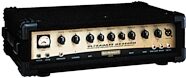
Behringer BX4500H Ultrabass Bass Amplifier Head (450 Watts)
The Behringer BX4500H offers all the features a professional bassist needs. With ample tone-shaping options and an onboard limiter, the BX4500H is a keeper.
Overall User Ratings (based on 117 ratings)
Submitted August 4, 2006 by a customer from warwick.net
"And now we have three!"
Verified Purchaser
zZounds has verified that this reviewer purchased this specific product from us.
Great value, and it delivers. Would consider Fender pro series and Ampeg is money was not an issue.
Sound
This amp's main reputation problem is people love to bash Beringher. Otherwise, it's a really great bass amp for the working musician. I wrote a review on my first one back in October of 2005. We now use three BX4500H heads in our setup. Two of them drive BA410 cabs, and one drives a BA115. Someone back then said buy two, they're cheap. We got thinking about it, and it seemed appropriate to buy three in fact! The heads work best with a single cab, because of the impedence, so we bought three cabs, and three heads. We loop them, plugging the bass into the first one, coming out of the effects loop to drive the second, and into the second through the return jack, which basically just uses the power amp section of that head, and then the same loop out of head two and into head three. You can then adjust the settings on the first head, just crank up the output knob on all three and KABOOM! You get far less noise by slaving them in this manner. It's still not as spiffy as some tube amp at twice the price, but there's little else that will match it at the money. By the way, use Speakon cables to the cabs, it really makes a difference.
Features
Please read my previous review, but in general, almost every feature is a useful one, especially if you decide to use this capable amp for other things than bass. I didn't think the ultrabass was important at first, but we have come to use it as well when we want an octaver effect.
Ease of Use
The variety of inputs and outputs make the set up I describe under sound possible and that is the key to making this a first class professional rig, while not spending the earth. And what I describe is just one possibility. A huge side benefit of the collective rig, is that it is modular. If you want to go to a small venue, or practice, take one head, and the BA115. Need a sweet setup in a medium sized venue, two heads, and the 2 BA410s. Need a system for an outdoor, or just want to impress the troops (and yes people will be impressed even though its Beringher) bring all three heads and all three cabs. A setup for any occasion.
Quality
All my amps and cabs came without problems and have not had any problems since. We play regularly, move them from gig to gig, use them for practice, and don't baby them. They are very solid, with both the amps and cabs being housed in thick wood and black rug.
Metal grills on the cabs have held up well and offer lots of protection.
Here's a story - On the first amp I said that the knobs were too "loose", no resistance to the touch, which feels "cheap". Well
by the time I bought number two, they had substituted knobs that had great high quality feel. Number three came that way as well. To say I was impressed, is an understatement. I am not saying they listened, I am just saying they are looking to improve and have.
Value
The rig I have described above includes 3 BX4500H, 2 BA410s and 1 BA115. Even if you think the heads are overrated in terms of power (which I doubt having used them) lets say they produce close to 1000 Watts, you have three cabes with 8 10" drivers, 1 15" driver, and three high frequency horns (switchable) and they all have aluminum cones. All this costs less than $1700 even with Speakon cables added.
Well - you could say Ampeg is the way to go - the 450W solid state heads there start at about $580 each. Hartke - $500. Do the math, then buy these things before they go up again.
Manufacturer Support
No real experience with service, they work far too well. I have used the Beringher web site to keep up with what's going on there, and I find it useful.
The Wow Factor
As a group this triple rig has a lot of appeal, but even the smallest version looks fine on stage.
Musical Background:
Active Musician
Musical Style:
Rock, Blues
88 of 89 people (99%) people found this review helpful. Did you?
Thanks for your opinion!
Submitted October 19, 2005 by a customer from warwick.net
"An extremely good buy!"
Verified Purchaser
zZounds has verified that this reviewer purchased this specific product from us.
The value makes the BX4500H almost irresistable, unless you have a huge budget two or three times the cost for this unit. Only drawbacks I can really see are the limitation of staying above 4 ohms total impedence, and the light feel of the knobs.
Sound
The BX4500H produces a broad range of useful sounds that work for many types of music. The high headroom allows nice clean sound, and the Gain control can add some crunch. Enormous power available. Certainly not as musical as a tube preamp or all tube amp, but really outstanding for the money.
Features
The supplied power cord is really short for a head to be used with large cabinets. The EQ controls (five rotary controls)are useful and effective. The Ultrabass and Shape are less important to me. It would be really great if it handled 2 ohm loads, like 2 BA410/BB410 cabs or 1 BA115/1 BA410.
Quality
Still early to give a long term quality rating. It arrived and worked as expected without any problems. The case is extremely sturdy. Would be better with metal corners on it. The rotary controls work fine, but are at odds with the overall quality feel. Good knobs are smooth and offer some resistance. These move too freely. Minor thing.
Value
I believe this to be the best buy available right now for a bass amp. It is also actually useful for other applications (with some tweaking of the controls). It is a very powerful amp and can provide a good solid clear sound. Short of much more expensive tube amps this is it.
Manufacturer Support
No experience with support yet.
The Wow Factor
When combined with various Behringer cabinets, it is an attractive stack on stage.
Musical Background:
Active musician
Musical Style:
Rock, Blues
46 of 47 people (98%) people found this review helpful. Did you?
Thanks for your opinion!
Submitted November 10, 2006 by a customer from hotmail.com
"Why buy anything else?"
I think this will last me at least 15 years. and when i do buy another head i'll buy this one again and again. Behringer is now the top listed amplifier in my book. I also went to music stores around me and heard ampegs, fenders, and crates and these were all over 500 watts and they weren't half as good as this thing. I love it.
Sound
This BX4500H head is the best I've ever heard. Seriously, don't listen to those reviews that say this has anything wrong with it, it seriously doesn't. I can play small gigs, clubs, and huge mass audience gigs. I can't believe I have this good of a sound. It is also extremely loud. I put the volume half way between 0 and the middle of the volume and it rattles my whole house. This thing has awesome sound.
Features
The footswitch that came with this is a great alternative to running up to your amp and pushing a button. I can be standing 25 feet from my amp and hit the ultrabass feature and BOOM! there goes your eardrums. The knobs on it are easy to read and i love the VU meter. It really helps when I'm rockin out and i see it in the red i know i have to turn the gain down.
Ease of Use
You don't even need the manual. You can get the best sound by just listening to it. You can change the sound to slap and pop bass or low metal sounding bass. I put this 450 watt head on top of my Behringer BA 410 Ultrabass cabinet and boy does it rock the shingles off my house. I play on this with a Fender P-Bass and it sounds great. But a little First Act bass would sound great on this thing.
Quality
This head is made extremely well you don't need any type of carrying case it's so rugged. I don't even have to baby it(even though i do). I love the carpet on it and the corner protectors. I have no worry of it breaking or blowing up. I really recommend the BA410 Ultrabass cabinet from Behringer.
Value
This is an EXCELLENT buy and it's the best thing ive bought with my money. This is better than an ampeg head and louder than many. I don't know why someone would buy something else.
Manufacturer Support
I don't know anything about the support because i've never had to have any problems fixed.
The Wow Factor
What a great looking head. It looks extremely sexy on my 410 i love the black and gold color. it's also extremely easy to transport.
Musical Background:
Active Musician
Musical Style:
Christian Metal, Hard Rock, Metal
20 of 21 people (95%) people found this review helpful. Did you?
Thanks for your opinion!
Submitted January 11, 2007 by a customer from msn.com
"Deck the halls with BAWLS OF POWER"
Verified Purchaser
zZounds has verified that this reviewer purchased this specific product from us.
I guess for what you pay for it you can live with the hum if the thought of opening it up scares you.. But for 4 dollars you can fix it so why not. I have never had a behringer die on me to this day. It is a great head and I plan to keep it until it quits working. I don't think I will ever trade this. Could also make a great amp for you home entertainment system since you can bypass the pre amp section AND the hum and just use the power amp.
Sound
This is the second Behringer that I have ever owned. It will not be the last. The sound on this thing is rather "dry" unless you know your way around Behringer's Eq. Both my GMX 212 and this BX4500 have a very narrow "sweet spot" that will take some time to dial in. There is a design flaw in this head. There is a ground loop between the instrument in's and the foot switch. Behringer has "fixed" this problem by cutting a ground wire off the PCB so everything grounds through the chassis. Think single coil guitar pickup humm... What I did was de solder the foot switch jack and replace it with a Peavey output jack that is ISOLATED. (plastic coated) I then re connected the wire that they cut which allows the inputs to short when you remove the cord. This is normal with all amps so that when you remove the cord there is no nose emitted from the speaker. This whole procedure took me about an hour to complete. from testing to soldering and finding parts. After the mod I put in some blue leds into the VU meter and and on the front panel to enhance its sex appeal. After the jack replacement this thing sounds as good as the Carvin 200 that I was running before. The XLR is a nice touch as it allows me to connect to the PA at our church. The XLR is post EQ so you can control the eq on your head and have the master mixer receive that sound. The 1/4 out is pre eq so the sound is dry that comes out of that. The pre amp over drives to the red zone very easily. I have Seymour Duncan 1/4 Pounders in my bass and I have to go into the active jack with the gain at less than 1/2. But it does play very nicely through it. I dont really see any use for the ultrabass octiver or the shape filter or the foot switch.
Features
Its got most everything that I could ever want. Should have a tuner built into it as the behringer guitar amps do. Heres what it has: 5 band eq, XLR out, 1/4 out, FX loop, active and passive ins. The VU meter should be bigger.
Ease of Use
It takes quite some time (a few days for me) to get your sound dialed in. I never really did find a use for the octiver, foot switch, or shape filter. Behringer could sugest some "preset" eq settings for it.
They also need to do a real fix for the grounding problem. People should not have to open up the amp and replace components right after they buy one.
Quality
It would be higher had I not had to solder in a new jack a day after buying it. I think I spent $4.00 on the jack. I have gigged rock concerts, churches, and band practices every week with this head. It gets torn down atleast two times a week and gets transported both times. Has great connectors, and is built well. Weighs 30 lbs. 450 watts. ooo.
Value
This is the most bang for the buck ever. Very durable too. If you decide to purchace this and can solder then you will be VERY happy.
Manufacturer Support
Behringer 1/2 butts this one on not fixing this problem right. Why contact them when they will just send you another defective one... Read the other reviews too!
The Wow Factor
I really like this amp. I would prefer Tolex as opposed to the felt that they put on it simply for cleaning reasons. I replaced the fan with a blue LED one and modded the VU and leds in the front with blue ones to further increase the "sex appeal" The guts are crafted very nicely: lots of thermal compound on the transistors, fan cooled caps.. and so on...
Musical Background:
Bass player for church music ministry, bass player in rock n roll band.
Musical Style:
Rock & Roll, Christian
17 of 18 people (94%) people found this review helpful. Did you?
Thanks for your opinion!
Submitted April 16, 2014 by vins d in mims, FL
"a lotta monster for a little cash"
Verified Customer
zZounds has verified that this reviewer made a purchase from us.
when i purchased this amp, I really had no idea what it was capable of, sure , I knew it was a 450 watt head, but i've come to realize its truly amazing for the price.It comes loaded with a ton of features & the tones you can wring out of this head are limitless. The 5 band eq is user friendly & the deep bass function is truly a blast. Behringer truly has the right idea for musicians on a budget, cant beat it at this price point. And the pay as you play plan that Zzounds offers, only makes it that much sweeter (you guys rock!) The head feels solid, seems to be well built. So far the longest jam this amp has seen was 6 hrs....& never got hot. Check 'em out you wont be dissapointed
Sound
powerhouse of sound & tonal range
Features
loaded with features & i'm a lazy typist,so i implore that you just trust me, it has all kinds of goodies to play with
Ease of Use
anybody can work this thing straight out of the box, its just a matter of dialing in the sound YOU want. its so user friendly its almost shameful.
Quality
the head is solid, nicely covered, feels very sturdy. The knobs on the eq are very light to the touch, but the work VERY well. I have other Behringer products that have served me well with no issues & i dont expect this to be any different .
Value
folks, if your lookin for a bass amp, give this one a shot, its worth every penny. It doesn't come up short anywhere & i'd challenge anyone to find a better amp with as many features for this little money
Manufacturer Support
never needed to contact them
The Wow Factor
i was pleasantly surprised indeed
Musical Background:
been playing guitar & a little bit 'o bass for almost 32 yrs & i love writing music
Musical Style:
my playing style is pretty diverse but steeped in rock. I do a little of everything, except country and reggae. both respectable
3 of 3 people (100%) people found this review helpful. Did you?
Thanks for your opinion!
Submitted July 8, 2006 by a customer from hotmail.com
"Dreams Come True"
This review has been selected by our experts as particularly helpful.
I love Behringer products. That's really all I have to say. I expect to add an extra power amp onto this so I can power cabs above 450w @ 4ohm. I'd get another if I needed it.
Sound
Behringer amps have the exact sound that I like. Very deep and tight yet at the same time there's brightness for the higher notes. The shape filter is awesome. I like the deep switch too, except it makes the amp clip easier. I don't use the Ultrabass feature, it's basically an octave effect, but it's pretty cool. This baby handles my 5-strings with no problem.
Features
All the different settings and buttons and in/outs. I love it. The VU meter is a pretty awesome feature.
Ease of Use
Plug and play baby.
Quality
I haven't moved around much with this head yet, so I don't know how much of a beating it'll take. Then again I don't plan for it to take a beating so, no worries. Everything works great.
Value
450 watts for $250!! Best deal ever.
Manufacturer Support
The dealer I bought this from said Behringer has a policy that they will replace anything that breaks in the first year with a brand new one instead of fixing a broken product.
The Wow Factor
I've been dreaming about having one of these for 2 years (when the BX3000 came out).
Musical Background:
In a band
Musical Style:
Hard Rock
7 of 8 people (88%) people found this review helpful. Did you?
Thanks for your opinion!
Submitted December 24, 2013 by Jeff P in Mentor, OH
"Behringer ULTRA BASS BX 4500 H"
Verified Purchaser
zZounds has verified that this reviewer purchased this specific product from us.
Let me be the first one to tell you that this is by far hands down one of the best Amp heads I have played with ! Not to mention so much force. The compression can allow for me to run Dorian scales to sublime to Mastodon with just natural adjustments. I am so very pleases and believe me over 20 years of insane bass playing this head paired with a cabinet is a bass players dream !!!
Musical Background:
I am a 22 year bass player, I play the 5 string as my wepon of choice,I have played in over 15 bands over the years
Musical Style:
Metal, Heavy Metal, Classic, 80's 90's alternative, Drumm and bass, Ragee , 70's disco, Talented professional very aggressive
1 of 1 people (100%) people found this review helpful. Did you?
Thanks for your opinion!
Submitted November 9, 2014 by Tim S in Indianapolis, IN
"Behringer BX4500 Ultrabass Head"
Verified Purchaser
zZounds has verified that this reviewer purchased this specific product from us.
I am very pleased with the Quality and features of this amp. It offer's a wide range of tones and has awesome power that can shake the walls without distorting. A very sturdy well built amp at a great price.
Musical Background:
Iv'e been playing bass for almost 40 years. Played in bands and at home.
Musical Style:
Progressive rock and jazz
1 of 1 people (100%) people found this review helpful. Did you?
Thanks for your opinion!
Submitted November 28, 2005 by a customer from yahoo.com
"Very Nice"
Verified Customer
zZounds has verified that this reviewer made a purchase from us.
Can't go wrong with this thing. if you're lookin for a thumpin bass amp, as long as you have the right kinda cab, then their is no better amp. I use the 4X10 cab that can handle 1000W and it's loud as thunder.
Sound
As long as you use a compressor before to boost the vu meter closer to the red it is one bad ass sounding amp. When i first got it i didnt use a compressor it was kinda weak. With the compressor i can turn down the gain and turn the main up so not much hiss, except for some from the compressor.
Features
The ultrabass is alright. The deep, and bright functions on the face of the amp are not bad. but the only problem is the ultrabass in the deep regions.
Quality
a lot of bang for your buck. the thing has two fans from what i read, a limiter on the main so you dont funk your speakers up, nice compressor, and XLR direct out for recording.
Manufacturer Support
havent experienced it. but i have two other behringer bass amps and no problems with them, so im expecting to have the same with this one.
The Wow Factor
Can't be any better i got mine 200 before they upped the price to 260
Musical Background:
Active musican and producer
Musical Style:
Hard rock, reggae, jam band, psychadelic
5 of 6 people (83%) people found this review helpful. Did you?
Thanks for your opinion!
Submitted March 19, 2007 by a customer from cox.net
"POWER + Versatile Tone - $ Big $ = GREAT DEAL"
Verified Customer
zZounds has verified that this reviewer made a purchase from us.
Overall this amp is a winner. There are sound shaping options galore and plenty of power to get that sound out. Stand back to minimize the buzz. I have had no failures, but hard to tell if the reports are disproportionate for the HUGE numbers of these heads out there. When you're ready to stop using that practice amp on stage, get one of these. It will take you far. ... Maybe to the point you get your next flashy rig free in a big endorsement deal! Yeah, I wish too.
Sound
This amp actually sounds pretty good. There are a lot of tone shaping options. Play with ALL of them in many combinations as soon as you get it. The LOW and BRIGHT switches are essential to understand. The SHAPE feature is great. One click and you can get a totally new sound. The octave function was disappointing for me. It does not track and hold nearly as well as others I have used.
Features
There are always a few things that you can add. This amp comes with an impressive set of tone shaping options that are equal or better than the average head in this class. I don't really NEED any of the things it does not have.
Ease of Use
Plug you bass and speaker and start using it. The BOOKS come in every language out there, and aren't necessary. Find your favorite tone with the SHAPE off. Then, turn on the SHAPE feature and adjust only it to get that "B" sound for your gig. I use a thick rock sound and set the SHAPE to brighten things up for this upper-register chordal piece I do. The included foot-switch makes this change a single tap back and forth.
Quality
Remember that these ratings are relative. This amp is the most it can be for the money. Several reviews talk about buzz and treble noise. This is mostly due to a wood case. Since the amp is not enclosed in metal, the electrical noise can easily get out into your pickups. Stand a few more feet away and it will get quieter. I made some small internal changes that made it even a little quieter. These really aren't necessary, just stand a couple steps away (or even turn your bass) and the electrical noise goes down almost totally.
Value
Looking at the features, the construction, the performance, and the sound, it is quite a value. As an engineer, I am disappointed that a few things are not different, but for the price they put out a hell of a product.
Manufacturer Support
I see support as two sided:
Pre Sale: Their advertising info and website has a fair amount of information. They aren't stellar, but much better than some of them out there.
Post Sale: Not used, no comment
The Wow Factor
Okay, the engineers in Germany did their homework and made a pretty good amp, that is a great deal for the price. My only gripe is that the front panel labels are hard to read. The top labels can't be seen from above because the control panel is recessed in the case. The lower labels are tiny, and hard to read on a dark stage. It does look sexy, you might have to squat down or squint to read it, though.
Musical Background:
Hobbyist
Musical Style:
Rock, Blues, Contemporary Christian
4 of 5 people (80%) people found this review helpful. Did you?
Thanks for your opinion!
Submitted October 5, 2005 by a customer from knology.net
"Hard to beat this one"
Verified Purchaser
zZounds has verified that this reviewer purchased this specific product from us.
This one is a winner. I have only had it for a few weeks but I know what I like and I like this product.
Sound
Great sound, lots of power. However, if you buy this head take advantage of the neutrik speakon connections! They blow away the
1/4 in. patches hands down! I was happy but not impressed with this head until my speakon cable arrived and then BOOM! Like night and day man! Best deal under $200 or $400 for that matter.
Features
Decent EQ and tone shaping. UltraBass sounds like a fat octaver, but a little bit muddy below middle C. Sounds rightous in higher registers.
Quality
From what I see so far, its very well made and durable.
Value
You won't find any thing this good for anywhere close to the price.
Manufacturer Support
The best thing I like about a product is NOT having to call support. So far so good!
The Wow Factor
The head doesn't have alot of sex appeal but if you get one of the cabs with the aluminum cones and set it on top, it looks hot.
Musical Background:
Active musician
Musical Style:
Hard rock, classic rock, funk rock, jazz
7 of 9 people (78%) people found this review helpful. Did you?
Thanks for your opinion!
Submitted March 27, 2014 by Jeff V in Cincinnati, OH
"8 year update, Still giggin strong."
Verified Customer
zZounds has verified that this reviewer made a purchase from us.
Following up my review from '06, no regrets, no complaints
Hundreds of gigs, thousands of power on hours, zero problems. Still paired with the bb210, shame they don't have those anymore.
Musical Background:
Active since 86...
Musical Style:
Hard and classic rock
1 of 1 people (100%) people found this review helpful. Did you?
Thanks for your opinion!
Submitted January 25, 2011 by a customer from hotmail.com
"huge sound low price!!"
Verified Customer
zZounds has verified that this reviewer made a purchase from us.
overall its a great amp with basic features and a lot of power. the price and watts are just wright for a first bass head or back up head. i would defiantly recommend this amp to someone looking for a good low cost powerful bass amp.
Sound
this amp can get pretty loud especially when hooked up to 2 cabs. you can really adjust the sound for all kinds of music. it would be powerful enough to play a descent size gig. it is also a great amp for recording.
Features
comes with foot switch and that's it
Ease of Use
very easy to set up and adjust. just read the manual. thats why they give you one..
Quality
this amp feels very sturdy and i think it will take a beating but only time will tell.
Value
great value. one of the best on the market in its price range.
Manufacturer Support
haven't needed any. actually i have never needed any support with any of the behringer equipment i have bought
The Wow Factor
i would definitely buy another one
Musical Background:
active musician
Musical Style:
black / thrash / anything evil
Did you find this review helpful?
Thanks for your opinion!
Submitted July 24, 2006 by a customer from thepolecats.com
"Rolled the dice and got a winner!"
Rolled the dice.. bought it on price and reviews. Was pleased that I didn't have to send it back. In the future I may cross over to using a straight power amp like the EP1500 with the Behringer cab(s), since I could do most of the preamp stuff in the GT-6B.
Sound
Hard to give it a 10. I needed an inexpensive rig to replace my ailing Ampeg 115 and decided to go component again. Had a GK800RB and PV1820 forever before the Ampeg. Teamed with a BB210 Cab and sounds great. If you really want it to scream you need to run it @ 4 ohms though. Figure I'll get a BB115 to go with it eventually.
Features
Works as expected. Ultrabass... don't care really since got an octaver on my GT-6B. There is a audible pop when turning on the Ultrabass. Shape is nice; it's like a sweepable notch filter. Comes with a foot pedal that can switch the Ultrabass and Shape on/off (haven't used it yet)
Ease of Use
Gain structure is a little weird but easy to get used to. For whatever reason I haven't found the input meter to be terribly useful.
Quality
Solid, feels well put together. Used it in several outside gigs where the temps were well into the 90's and the unit in direct sun. NO troubles.
Value
Nice features and great price. $450 for this head and a 210 cab... Wow!
Manufacturer Support
No clue. Haven't had to.
The Wow Factor
Looks nice. Maybe a little spartan compared to some, definately looks cooler that my 800RB did.
Musical Background:
Active
Musical Style:
All kinds of Rock
2 of 3 people (67%) people found this review helpful. Did you?
Thanks for your opinion!
Submitted July 30, 2011 by a customer from yahoo.com
"Buy it if you're on a budget, or just need a back-up rig."
Verified Purchaser
zZounds has verified that this reviewer purchased this specific product from us.
Sound
Loud,for sure. Slightly noisy on the high end. EQ makes sound shaping easy. Punchy.
Features
The ultrabass feature is kinda hokey, and I doubt I'll ever use it.
Ease of Use
Spend a few minutes with it, and you'll dial in a sound you like.
Quality
So far, no problems with quality.
Value
For the price, cannot beat this amp!
Manufacturer Support
Haven't had to use customer support yet.
Musical Background:
Working "utility" basist.
Musical Style:
Whatever pays.
2 of 3 people (67%) people found this review helpful. Did you?
Thanks for your opinion!
Submitted November 18, 2005 by a customer from hotmail.com
"good power,great tone,sturdy,light wt,eq that works, plenty of hook ups ,don;t have to sell any thing to get one."
Verified Customer
zZounds has verified that this reviewer made a purchase from us.
well i keep all my amps for years,but so far this amp ultrabass4500 is perfect for any cab that i own, not to many amp heads sound good in other cabs, this was a great surprise,and the weight ,that i no longer have carry is wonderfull.keep in mind,the tones you want are there, i did A&b with other amps through the same speaker and this was right on, after iwas through i ask what the price was and floored.
Sound
i find no hassles on sound,playing became much easy,no fighting to get the notes out.when i first got the amp, iput it through (2) 18 speaker cab, perfect. then (2) 1x15 cabs with jbls very clear,and now(2)BA210 cabs. how is that you can use 3 differant cabs and the sound is very good,most important did not spend hours to get what i wanted,then went out and purchase another amp for a second set up.
Features
over all good product, no need for the ultrabass just yet.if i had to find the one thing that matters is the line noise.
Quality
well anything can happen,but the amp and the speaker cabs seem just as good as any cabs ,that i have or seen in stores, i was surprise to see a cooling fan and vu meter,the company should have put rubber feet on the side without, the handle ,power cord could have been longer.how long the amp will last well , if the electronics are good, then i think it will last.
Manufacturer Support
called the company and ask if a total of (4) 8 ohms cabs can be used and said no, contact back from the company was very quick .
The Wow Factor
it looks good,
Musical Background:
active musician
Musical Style:
rock blues
3 of 5 people (60%) people found this review helpful. Did you?
Thanks for your opinion!
Submitted July 21, 2007 by a customer from yahoo.co.uk
"power and reliability at a fantastic price"
dont be put off by the price it delivers the goods as good as many other branded heads of double the price or more
Sound
used it for over a year now as my main stage amp no reliability probs at all
i did own an ashdown abm 300 evo before this and to be totally honest with you theres not that much difference between the 2
my 450 actually gives out 402 watts rms used it with a 2x15 trace elliot cab and it was exactly the sound i wanted
Features
a rip of from ashdown but there you go everything works as it should i found the pedal works as it should a removeable cable to the pedal would have been better. the octave below works great but only if you keep it below about 3 on the dial i find this usefull as i play a 4 string and if im playing high up on the fretboard it adds some extra depth
Ease of Use
take a bit of time to find your sweet spot sound before you drag it off to gig it
Quality
very good well made. gets thrown in and out of the van for over a year and still delivers.a little hum if you stand with your guitarvery close to the head but you can get round that
Value
exellent value for money
Manufacturer Support
never had to use em
The Wow Factor
now been replaced with an ashdown superfly 500 but i still take it onstage and power it up underneath the ashdown just in case
Musical Background:
ex pro now gigging semi pro
Musical Style:
rock mainly
5 of 8 people (63%) people found this review helpful. Did you?
Thanks for your opinion!
Submitted February 19, 2008 by a customer from att.net
"More Bass Bang for the Buck!!!"
Verified Customer
zZounds has verified that this reviewer made a purchase from us.
Overall this amp is a steal! The Quality si there. The Sound is there. The volume is there,just run 2 cabs for a 4 ohm load.It has "extra" features like the Ultra Bass and Shape and even includes the footswitch. Drive Behringer Bass Cabs with horns and pick up a cheap nonmomentary footswitch and you can turn the horn on and off at will. That's alot of extra's that most Bass player's DON'T HAVE!
Sound
The sound of this amp is warm and bright, I kill alot of the treble available and boost the bass with the deep button and use the shape footswitch when I go above the 12th fret for any length ot time, like in"Hotel California".I'm pretty picky, I owned a G&K 700RB before this rig!
Features
The supplied power cord is a little short, especially if you stack a couple cabs and put the amp head on top! I love the included effects pedal! I use the shape pedal any time I play above the 12th fret for any length of time, like in "Hotel California". I have heard people Bash the Ultra Bass pedal sound, but it is included as an extra option and I use mine in my Bass Solo and even wrote a song using it in the prelude and ending, just don't play too fast or try cords, it is not intended for that just like any other Octave adding effect!
Ease of Use
This amp has alot of features, so it takes a little more time to get your sound dialed in. I use a Boss ME50B Bass effects unit thru the effects loop and with my "stock" sound on the amp all of my effected sounds are great, and I use the Ultra Bass on intros the Shape to add tone and with an add on pedal you can turn the horn on or off on your Behringer cabinets for extra treble to cut through the mix. This is especially handy if you have two guitar players hogging up all the midrange. Hit the horn on and you can hear yourself alot better.
Quality
The fit and finish on these amps is perfect. The amp has done everything I could ask for and more! I rarely play above half volume since Bass is going thru my Behringer PMP 5000 powered mixer too! I did add 2 rubber feet on the side opposite the handle, but that only cost me a buck and a minute so big deal!
Value
This Bass Amp should get a "12" for value! Nothing else on the market can touch it! Usually you pay a "buck a watt". When I get more money I am going to double up by buying another STACK, just so I can make my pant legs flap in the breeze!
Manufacturer Support
I haven'y had to use support, but I am told they will REPLACE not fix your unit within 1 year of purchase so that alone gives it a 10! Why wait for repairs when you can get a new one right away. Their website is GREAT, you have to check it out just to see what else they make, and it's ALOT! Behringer.com
The Wow Factor
I LOVE the black on gold, and I LOVE the Old Style Knobs. My friend bragged about his and let me play it before I bought so I really liked it after I found out how inexpensive it really was!
Musical Background:
Active Musician, I play all instruments in ROCK and I record music
Musical Style:
Rock, Classic Rock, Country, Original Music
2 of 4 people (50%) people found this review helpful. Did you?
Thanks for your opinion!
Submitted July 23, 2006 by a customer from yahoo.com
"If you need something quick, don't have a lot of money, and totally ignore everything I have said about it, go for it."
If it lasts 8 years, then it has done it's job. Much less then I will be a little dissapointed
Sound
Not sure what the problem really is, but it has this really annoying hiss to it. There could be a variety of causes on my part, like dedicated breaker outlets or the cables that I use but I picked it up to replace my '72 cirwin vega, that didn't have this issue. Set that aside and you have a sic peice of equipment.
Features
First thing to do when you buy one of these things new is to throw the foot switch away. Just do it. It's usless. But the ultrabass button thingy makes it sound like your running it through a parallel detuner effect, which is neet to play with.
Ease of Use
Put your cables where they go, plug it in, and turn it on. In that order. Although it does come with a booklet, but this is basically what you do.
Quality
If you buy these new out of the box, this thing is pretty slick lookin. But like any piece of equipment, if you drop it, dont secure it in the truck, or spill beer on it, I'm sure it will lose it's cosmetics and look like almost everything else that I own. We like to have fun.
Value
I cannot argue. I got a real good deal. A hookup at a guitar shop that I have done some stage handing and video for gave it to me 1% above cost. Not fair but I could have gotten this deal on anything else that day, but I liked this one for some reason.
The Wow Factor
Well, I picked it up because it reminds me of my wife, loud small and cheap.
Musical Background:
cross between hobby and active.
Musical Style:
industrial/funk
1 of 2 people (50%) people found this review helpful. Did you?
Thanks for your opinion!
Submitted September 24, 2013 by Bobby BoDean in Westside, OH
"Ultrabass is AWESOME!!!"
I am Totally Satisfied with the Quality,Ease of use and INCREDIBLE TONE QUALITY of this bass rig. It's AWESOME!!!!!!!
Musical Background:
40 yrs professional artist. Multi-Instrumentalist
Musical Style:
Various.
Did you find this review helpful?
Thanks for your opinion!
Submitted September 27, 2014 by Bobby G in Morrilton, AR
"Nice Amp Head"
Verified Purchaser
zZounds has verified that this reviewer purchased this specific product from us.
Nice head for smaller gigs...pretty straight forward operating the head...the only complaint is that the head is a little heavier than I thought it would be...Smooth bottom end and clean ultra bass push
Musical Background:
Small garage band
Musical Style:
Country, Blues, some Big Band
Did you find this review helpful?
Thanks for your opinion!
Submitted February 25, 2006 by a customer from EXCITE.COM
"NEED A GREAT BASS AMP AND YOUR LOW ON CASH?"
I expct no less than 5 to 10 years of hard service.
Sound
Great value. Loads of power, loud and clean. Would love to have tube preamp like a Hartke. Octaver, well its a cool toy! Built like a brick out house! The meter, chicks dig it! Not useful, but chicks dig it!
Features
Great tonal control and shaping
Ease of Use
Large clearly marked controls.
Quality
No problems after 2 years of throwing the thing in back of trailer.
Value
Can't buy a new 400w (REAL 400 watts)with this much quality for less money!
Manufacturer Support
Never need them but thy alwasys send me news letters monthly.
The Wow Factor
Black and gold yeah it looks sexy!
Musical Background:
IN BASSNESS FOR 30 YEARS
Musical Style:
ROOTS
1 of 2 people (50%) people found this review helpful. Did you?
Thanks for your opinion!
Submitted February 15, 2010 by a customer from yahoo.com
"This is a beast."
I will be satisfied for as long as i can keep this up and running. with my band getting bigger and bigger, i will need to upgrade to a louder head so i can be louder. but i will ALWAYS use this head.
Sound
The sound of this product is incredible, if you have the cab to compliment it. The sound goes perfectly with my metal band..the only issue i have is the ULTRABASS button, it makes it sound too choppy. The sound live versus recording is the exact same, i direct input my head when i record so it just makes everything better.
Features
it didnt include any accessories.
Ease of Use
it is soo easy to get amazing sounds from this head.. and its very playable.
Quality
the product is made very very well, and it very usable.
The Wow Factor
it has an alright "sex appeal" but just knowing what this baby can produce i would never turn it down!
Musical Background:
Active Musician, Recording Musician
Musical Style:
Metal, Death Metal, Melodic Death
of 1 people (0%) people found this review helpful. Did you?
Thanks for your opinion!
Submitted June 10, 2011 by a customer from HOTMAIL.COM
"AN AFFORDABLE...REAL POWERFUL BASS AMP FOR A CHANGE...YOU WON'T REGRET IT!!!"
Verified Purchaser
zZounds has verified that this reviewer purchased this specific product from us.
I KNOW THAT I WILL BE SATISFIED WITH THIS AMP FOR A LONG TIME TO COME...OR ELSE...WHY WOULD I BUY A SECOND...OR POSSIBLY A 3RD...IF AN AMP CAN STAND UP UNDER THE PRESSURE I CAN INFLICT...IT'S A GREAT AMP...SO FAR SO GOOD....
Sound
MY NAME IS FRED GRANT...WHEN I FIRST SAW THIS AMP ADVERTISED ON THE WEB...I THOUGHT IT WAS A SCAM...A 450 WAT BASS AMP WITH ALL THESE FEATURES FOR $250....UNHEARD OF..SO I DECIDED TO TAKE A CHANCE...I OREDERED IT...IT CAME WITHIN A FEW DAYS..I PLAY IN A CHURCH...I HAD A SUBWOOFER UNDER THE STAGE POWERED BY AN OLD FENDER 150 WATT PA AMP...SO WHEN THE AMP WAS DELIVERED...I HOOKED IT UP TO THE SUBWOOFER AND BAM!!!IT MADE THE WHOLE STAGE SHAKE LIKE AN EARTHQUAKE HIT...I MEAN THE BASS ENERGY WAS REMARKABLE...EVEN AT 8 OHMS...THE THING JUST CRANKED...I RAN IT AT UNITY GAIN...TURNED MY BASS WIDE OPEN...EVERONE FELT IT..FROM THE CHURCH TO THE PARKING LOT...YOU FELT THE ENERGY EVEN BEFORE YOU ENTERED THE CHURCH....WITH ALL THIS SOUND AT THIS PRICE..I'LL BUY ANOTHER ONE..
Features
THIS AMP CAME WITH A FOOTSWITCH FOR THE SHAPE AND ULTRA BASS FUNCTION...AND IT WORKS BETTER THAN I EXPECTED...BUT I DON'T NEED THE ULTRABASS BECAUSE I PLAY A YAMAHA BBN5 5 STRING BASS TUNED TO DROP A...SO I CAN DO THE SUB HARMONICS STRAIGHT FROM THE STRINGS...BUT FOR SOMEONE THAT PLAYS THE STANDARD 4 STRING...IT IS A GOD SEND...AND I ESPECIALLY LIKE THE ACTIVE COOLING SYSTEM...I CAN PUSH IT TO THE LIMIT..AND I KNOW IT WILL BACK ME UP...
Ease of Use
WHAI I GENERALLY DO IS RUN THE AMP AT UNITY GAIN...KEEP THE TONE CONTROLLS AT THE FLAT POSITION...AND PLAY...IF I NEED MORE BOTTOM...I TOUCH THE DEEP BUTTON.....IF I NEED MORE HIGHS...I HIT THE BRIGHT BUTTON..THIS USUALLY DOES THE TRICK....THIS IS QUICK AND EASY...GREAT BASS SOUND...NO SWEAT....NO HASSLE.....KABOOM!!!!!!
Quality
THE AMP SEEMS TO BE MADE OF THICK WOOD...WITH QUALITY CARPET COVERING...AND PLASTIC CORNERS...EVENTHOUGH I WOULD PREFER MEATL CORNERS..THE THICK PLASTIC SEEMS TO DO THE TRICK...THE AMP IS VERY ROAD WORTHY...CAN TAKE QUITE A THUMPIN'..AND KEEP ON BUMPIN'
Value
THIS AMP IS THE BEST VALUE I'VE EVER SAW AT $1.80 PER WATT...I THINK ANYONE WILL BE HARD PRESSED TO FIND A BETTER VALUE...A LOT OF AMPS ADVERTISE A CERTAIN WATTAGE RATING...BUT THEY DON'T TELL YOU IT IS PEAK WATTS..AND THEREFORE CAN'T DELIVER THE WATTAGE CLAIMED IN REAL LIFE SITUATIONS...(RMS)...I WILL BUY ANOTHER ONE...YOU BET...
Manufacturer Support
I NEVER HAD THE NEED FOR CUSTOMER SUPPORT BECAUSE I NEVER HAD ANY TROUBLE...I GUESS THIS DESERVES THE VERY BEST RATING...DON'T YOU AGREE???
The Wow Factor
THE AMP LOOKS VERY APPEALING ON STAGE...ALTHOUGH..PEOPLE SEEM TO THINK THAT I HAVE ANOTHER AMP HIDDEN SOMEWHERE BECAUSE OF THE SMALL PHYSICAL SIZE AND THE MASSIVE SOUND POWER...I JUST TELL THEM...WHAT YOU SEE IS WHAT YOU HEAR...
Musical Background:
EXTREME BASSIST
Musical Style:
YOU NAME IT..I PLAY IT
of 2 people (0%) people found this review helpful. Did you?
Thanks for your opinion!
Submitted November 1, 2006 by a customer from gmail.com
"Disappointed in the lifespan."
If you're looking for an inexpensive back-up head that won't see much use unless your primary head dies, this will do the trick. If you want something that will be a good investment as primary road gear, seriously look elsewhere.
Sound
There WILL be a buzz in the trebble. It won't come out at first, but after a while of using it the buzz will make you need to dial down the trebble. If you're not a fan of bright sounding bass, I guess this wouldn't be a huge problem.
Features
For the money it does include nice effects, which is good when you don't feel like lugging a ton of pedals around.
Ease of Use
It's fairly intuitive.
Quality
After 6 months of use this head developed a HORRIBLE buzz in the trebble. Additionally, other heads rated at less wattage can play louder and cleaner.
Value
It's inexpensive, but you'll need to replace them much more frequently. It's probably a better idea to spend more money and get a better quality head.
The Wow Factor
It's pretty. If it sounded as good as it looks it would be a very nice amplifier.
Musical Background:
Active Musician
Musical Style:
Jazz, Metal, Rock
2 of 5 people (40%) people found this review helpful. Did you?
Thanks for your opinion!
Submitted November 18, 2005 by not available
"beware of hum sound"
real soon
Sound
signal to noise ratio was noisey
Features
there is no reverse polarity switch to eliminate hum
Quality
overall ok
Manufacturer Support
would be nice to see effect pedals in stores to try out
The Wow Factor
its ok
Musical Background:
active
Musical Style:
all
2 of 5 people (40%) people found this review helpful. Did you?
Thanks for your opinion!
Submitted December 23, 2005 by a customer from hotmail.com
"Is this for real? You'd better believe it!"
This review has been selected by our experts as particularly helpful.
Sound
The sound on this head is great! Lots of bottom end to make my k145 boom and great highs for my two JBL horns. I used to use an 800RB and thats what I built this cabinet for; 2 JBL bullet horns, one D120, and one K145, all in a modified JBL folded horn box stuffed with lambs wool. I play an '83 Fender p-bass Elite and this Behringer works for me. I paid $339.00 CDN for it, and I still can't believe it, all that bang for a couple of bucks. I do like Edens, but they are a thousand more. I love R&B but I'm playing in a sixties band with my friends and this makes the bass edgy, the way sixties rock was( I hate to admit it but I was there.
Features
The most useless feature (to me) is the octiver. I can never make it sound good. I wouldn't mind a built in tuner and the fuzzy covering, well they could have done better, maybe black vinyl or smething. And the faceplate looks a little bland.
Quality
Very sturdy and rugged, it would be great on the road and you could bring a spare Like I said before the only thing would be cosmetics, something very easily corrected.
Value
fantastic price, how do they do it?
Manufacturer Support
Nothings gone wrong yet, things a tank.
Musical Background:
hobbyist with 35 years experience
Musical Style:
rock R&B funk
4 of 5 people (80%) people found this review helpful. Did you?
Thanks for your opinion!
Submitted May 12, 2007 by a customer from yahoo.com
"get a better head"
i liked it untill it blew. i was pissed because im not a person w/ that much money. so now i got to buy some thing to even play on.
Sound
the sound was good the thing only lasted like 3 months
Features
it had pretty good features, only if it lasted longer
Ease of Use
it was easy as hell to use
Quality
it was gone in three months. it wouldn't even get power to it
Manufacturer Support
if i were u i wouldn't get it. i would get the combo where it has this head in it but it has 2 aluminum
The Wow Factor
i wanted it. it had great sound. i loved the harmonics. and it had a great price. but once again it was great but didn't last long
Musical Background:
in a band. trying to get stuff together. and jamming
Musical Style:
death metal
3 of 8 people (38%) people found this review helpful. Did you?
Thanks for your opinion!
Submitted October 7, 2007 by a customer from datacruz.com
"save your money for an ampeg!!!"
replaced it with a ampeg you was a waste of $250
they never offered to fix it
Sound
have bx300t nosie "frying eggs" with no imput cabinet was amatched set 15" w/horn
heaad would shut down when under load it finaly quit
Features
just amp and cord
Ease of Use
knobs would move when you played had to put tape on them mostly volum
Quality
looked ok no dents dings scratches
Value
cheep power only worth alitel more then half of asking price
Manufacturer Support
called about the hiss sound. well first finding a number was not easy. they said turn your trebel and hi mid down???
The Wow Factor
looks ok but is crap
Musical Style:
jazz/rock/pop
5 of 12 people (42%) people found this review helpful. Did you?
Thanks for your opinion!
Submitted April 8, 2006 by a customer from hotmail.com
"You get what you pay for."
The spec says 450W, I doubt that. I use the amp with a 1x 10" cab for home practise ONLY, and for that, it's quite ok. For gigs, no way, I turn to my Eden stuff for that. What's to like, well the pricetag.
Sound
Sounds ok, 450W ??! Yeah right !
Features
It came with a foodswitch which is good, the fan however is annoying. The Octaver (UltraBass) produces some annoying hum. the "shape" eq feature is ok.
Quality
Seems solid.
Value
I guess it's ok value for the money.
Manufacturer Support
No idea.
Musical Background:
Active Musician
Musical Style:
Rock,Pop
1 of 6 people (17%) people found this review helpful. Did you?
Thanks for your opinion!
Submitted March 9, 2011
"Best boom for the buck"
Verified Customer
zZounds has verified that this reviewer made a purchase from us.
Sound
The sound is decent with shape knob at around 11o clock. Has plenty of power for my Laney 8x10. Knobs work well as far as sound adjustment.
Features
It's pretty basic and keeps things simple and Has what you need. I especially like the speakon connections. The pedal it came with is useless. The shape knob does wonders and the limiter is especially useful.
Ease of Use
it doesn't much easier than this amp.
Quality
After about a year, I had to re-solder the joints on the power switch. I've had this amp, used and abused it heavily since 2006 and out has never given me any problems.
Value
Look at other amps with this power. You can't beat this price.
Manufacturer Support
Dont know
The Wow Factor
It's plain jane, but the gold and the VU meter are nice touches.
Musical Background:
Active musician
Musical Style:
metal, blues, classic rock
Did you find this review helpful?
Thanks for your opinion!
Submitted November 18, 2007
"most power for the money."
i wouldn't sell it. nice back up amp. but i wouldn't replace it either.
Sound
could use a compressor, but the shape and deep buttons come in handy. for the price it's not bad. don't use on an 8x10. perfect for 1x15 or 4x10. had it hooked up to a 15" 4ohm black widow and it sounded awesome but later blew the speaker.(it was 15 years old) takes awhile to find the groove spot on it.
Features
came with a cord and pedal. the instruction manual was well informing.
Ease of Use
about as easy as it gets. just a shape, ultrabass, and 5 band eq
Quality
only had one problem with a wire getting a bad connection on the on/off switch, but was probably my bad due to being very rough on it. it get's thrown around quit a bit.
Value
it was well worth the money, and is quite powerful. wouldn't use it with behringer cabs or aluminum speakers.
Manufacturer Support
can't say, never needed it
The Wow Factor
the gauge is cool. that's about it.
1 of 6 people (17%) people found this review helpful. Did you?
Thanks for your opinion!
Submitted December 13, 2006
Behringer BX4500H Customer Review
Verified Customer
zZounds has verified that this reviewer made a purchase from us.
i wouldn't buy this twice.
Sound
I could never get the tone i wanted out of this thing, but it got loud easy enough.
Features
The octaver was fun for a bit, and the little tone buttons made it easy to get a better sound. i found the footpedal to be pretty much useless.
Ease of Use
very easy to use, straightforward.
Quality
after a few months of playing, mine stopped turning on. yeah.
Value
for this price, its an ok value. if you need something that will last for a long time, i suggest spending a little more.
Manufacturer Support
i hear they are very good, haven't dealt with them yet.
The Wow Factor
looks pretty cool. VU meter is nice, and there are little lights on the front when you turn things on.
1 of 2 people (50%) people found this review helpful. Did you?
Thanks for your opinion!
Submitted November 9, 2006
"The 60Hz hum - move the transformer away from preamp section."
Sound
You WILL here the 60Hz buzz. You need to move the transformer away from the preamp section. I've had to move the transformer completely outside of my Behringer microphone pre-amp tube unit due to 60Hz coupling.
Musical Background:
Electrical Engineer, Bass Player
Musical Style:
Rock, Classical, Jazz, Techno, Alternative (No Country!)
2 of 4 people (50%) people found this review helpful. Did you?
Thanks for your opinion!
Submitted September 16, 2005
"Much better improvement over the previous one."
Verified Customer
zZounds has verified that this reviewer made a purchase from us.
I am pretty much stuck with it for awhile, and like I said If you want to really piss people off buy about four of these and link em together and then you can have four stacks with all of their own tone control, or just get power amps. either way this thing can fill a room with low pitch. It could kill if you get four and the acoustics are right.
Sound
This thing can pack a punch better than the 3000
Features
as long as you match the stack, this thing in packed with features. of course Ultrabass and smooth have become my best friend. I rumble all of the houses on my block. The VU meter helps you cue in the right volumes.
Quality
Built very well, it keeps cool, and runs for hours. The VU is a great tool if you know how to use it.
Value
Definately worth it if you need something fast and still great with quality.
Manufacturer Support
Haven't had any promlems with it at all.
The Wow Factor
For a 450 watt amp, this thing says come on and do me. I love the fact that you can double the stack If you buy two(why not go for four), and just go from line out to line in easily with no extra buzz.
Musical Background:
Active Musician, student recording engineer
Musical Style:
Rock, "Punk Jazz", funk, metal
6 of 6 people (100%) people found this review helpful. Did you?
Thanks for your opinion!
Please wait.