
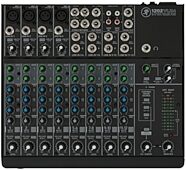
Mackie 1202VLZ4 12-Channel Mixer
Equipped with 4 Onyx microphone preamps, this sturdy 12-channel mixer lives up to the Mackie VLZ series' reputation for low noise and wide dynamic range.
$329.99
- 8 payments of$41.25/mo
- No Credit Check6 payments of$55.00/mo
Mackie 1202-VLZ Pro 12-Channel Mixer
No longer available at zZounds


zZounds Gear Experts Say...
12x2 professional mixer.
Overview
No matter how much you spend on a microphone, its ultimate performance depends on how it interacts with the preamp it's plugged into. Yes. We openly admit it: Many high-end mic preamps can effortlessly amplify the slightest sonic nuance, creating an aural panorama that's breathtakingly realistic, excitingly vivid, and truly 3-dimensional in scope. For years, they've provided fidelity that just hasn't been possible with the "stock" mic preamps built into mixing consoles. Until now.
To develop the new XDR (eXtended Dynamic Range) mic preamp, the engineering team started with blank paper, concerned only with matching or exceeding the performance of $500 to $2000-per-channel esoteric preamps. They went through hundreds of iterations and revs and spent countless hours subjectively listening (and arguing). They started all over again several times. They scoured the world for rare parts. Then they spent more time critically listening and evaluating the design with every high-end microphone you can think of. Then they brought in veteran recording and live sound engineers for more exhaustive listening tests.
What they ultimately ended up with is not just an awesome sounding design. XDR is also a) highly resistant to damage caused by "hot patching" (caused by routing a phantom powered mic through a patch bay); b) remarkably independent of cable-induced impedance variations; and c) able to reject extremely high RF levels without compromising high frequency response.
Because a mic preamp… read more must amplify faint one millivolt input signals up to a thousand-fold (60dB), its rectification components can also pick up radio frequency interference (RFI) from AM and FM stations, cell phones, and pager transmitters - even microwave ovens - and amplify them to audible levels.
Mackie assaulted RFI on 3 fronts. First, they incorporate bifilar wound DC pulse transformers with high permeability cores that reject RFI but don't attenuate the sound at 15kHz and above. Second, they use carefully matched, high-precision components for critical areas of the XDR preamplifier. Third, they direct-coupled the circuit from input to output and used pole-zero cancellation constant current biasing (which also avoids increased intermodulation distortion at high common mode signal levels).
Bottom line for the non-technical: you can use the new XDR mic preamps at the end of extremely-long cheap mic cables in an RFI-saturated urban environment while talking on your cell phone...without hearing a trace of RFI.
If a mic preamp isn't designed right, it will actually sound different depending on the impedance of the microphone and the cable load! XDR's Controlled Interface Input Impedance system accepts an enormous range of impedances without compromising frequency response.
0.0007% Total Harmonic Distortion. The lowest ever in any compact mixer.
Flat response. Not only are XDR mic preamps flat within a tenth of a dB across the bandwidth of any known microphone, but are also only 3dB down at an astonishing 192kHz!
Super-low intermodulation distortion at very high operating levels thanks to instrumentation-style balanced differential architecture, linear biasing, and use of DC-coupled pole-zero-cancellation constant current that frees the mic preamp from power supply fluctuations.
Think of the 1202 as an ultra-premium, esoteric mic preamp...that just happen to have really excellent compact mixers attached.
Features
Ultra-low noise, highest headroom in its class
4 new precision-engineered XDR(tm) Extended Dynamic Range premium studio-grade mic preamps with: ultra-wide 0-60dB gain range, 130dB dynamic range for 24-bit, 192kHz sampling rate inputs, +22dBu line input handling, distortion under 0.0007% (20Hz-20kHz)
Advanced DC pulse transformer RF rejection
12 line inputs (4 mono, 4 stereo pairs)
Separate RCA-type tape/CD inputs and tape outputs (unbalanced)
2 aux sends with 15dB of extra gain above Unity
Constant-loudness pan pots
PFL Stereo in-place Solo on each channel
2 stereo aux returns with EFX to Monitor
Aux 1 master with Monitor/Post assign
3-band active EQ (80Hz, 2.5kHz, 12kHz)
18dB/oct. 75Hz Lo Cut filter eliminates stage rumble, wind noise, P-pops, and low frequency recording studio room resonances
Extra ALT 3-4 stereo bus for sub-mixes, separate recording, monitor, and 'mix minus' feeds
Control Room/Phones multi-input source matrix
Phantom power for premium condenser mics
Rugged steel chassis, sealed rotary controls
Built-in power supply - no wall wart! read less
To develop the new XDR (eXtended Dynamic Range) mic preamp, the engineering team started with blank paper, concerned only with matching or exceeding the performance of $500 to $2000-per-channel esoteric preamps. They went through hundreds of iterations and revs and spent countless hours subjectively listening (and arguing). They started all over again several times. They scoured the world for rare parts. Then they spent more time critically listening and evaluating the design with every high-end microphone you can think of. Then they brought in veteran recording and live sound engineers for more exhaustive listening tests.
What they ultimately ended up with is not just an awesome sounding design. XDR is also a) highly resistant to damage caused by "hot patching" (caused by routing a phantom powered mic through a patch bay); b) remarkably independent of cable-induced impedance variations; and c) able to reject extremely high RF levels without compromising high frequency response.
Because a mic preamp… read more must amplify faint one millivolt input signals up to a thousand-fold (60dB), its rectification components can also pick up radio frequency interference (RFI) from AM and FM stations, cell phones, and pager transmitters - even microwave ovens - and amplify them to audible levels.
Mackie assaulted RFI on 3 fronts. First, they incorporate bifilar wound DC pulse transformers with high permeability cores that reject RFI but don't attenuate the sound at 15kHz and above. Second, they use carefully matched, high-precision components for critical areas of the XDR preamplifier. Third, they direct-coupled the circuit from input to output and used pole-zero cancellation constant current biasing (which also avoids increased intermodulation distortion at high common mode signal levels).
Bottom line for the non-technical: you can use the new XDR mic preamps at the end of extremely-long cheap mic cables in an RFI-saturated urban environment while talking on your cell phone...without hearing a trace of RFI.
If a mic preamp isn't designed right, it will actually sound different depending on the impedance of the microphone and the cable load! XDR's Controlled Interface Input Impedance system accepts an enormous range of impedances without compromising frequency response.
0.0007% Total Harmonic Distortion. The lowest ever in any compact mixer.
Flat response. Not only are XDR mic preamps flat within a tenth of a dB across the bandwidth of any known microphone, but are also only 3dB down at an astonishing 192kHz!
Super-low intermodulation distortion at very high operating levels thanks to instrumentation-style balanced differential architecture, linear biasing, and use of DC-coupled pole-zero-cancellation constant current that frees the mic preamp from power supply fluctuations.
Think of the 1202 as an ultra-premium, esoteric mic preamp...that just happen to have really excellent compact mixers attached.
Features
Ultra-low noise, highest headroom in its class
4 new precision-engineered XDR(tm) Extended Dynamic Range premium studio-grade mic preamps with: ultra-wide 0-60dB gain range, 130dB dynamic range for 24-bit, 192kHz sampling rate inputs, +22dBu line input handling, distortion under 0.0007% (20Hz-20kHz)
Advanced DC pulse transformer RF rejection
12 line inputs (4 mono, 4 stereo pairs)
Separate RCA-type tape/CD inputs and tape outputs (unbalanced)
2 aux sends with 15dB of extra gain above Unity
Constant-loudness pan pots
PFL Stereo in-place Solo on each channel
2 stereo aux returns with EFX to Monitor
Aux 1 master with Monitor/Post assign
3-band active EQ (80Hz, 2.5kHz, 12kHz)
18dB/oct. 75Hz Lo Cut filter eliminates stage rumble, wind noise, P-pops, and low frequency recording studio room resonances
Extra ALT 3-4 stereo bus for sub-mixes, separate recording, monitor, and 'mix minus' feeds
Control Room/Phones multi-input source matrix
Phantom power for premium condenser mics
Rugged steel chassis, sealed rotary controls
Built-in power supply - no wall wart! read less
Specs
Main Mix Noise
20Hz-20kHz bandwidth, 1/4 in. Main out, channels 1-4 Trim @ unity gain, channel EQs flat, all channels assigned to main mix, channels 1 and 3 pan left, 2 and 4 pan right
Main Mix knob fully counterclockwise, channel Gain knobs down: -100dBu
Main Mix knob unity, channel Gain knobs down: -86.5dBu
(90dB Signal to Noise Ratio, ref +4dBu) Main Mix knob @ unity, channel
Gain knobs @ unity: -84.5dBu
Total Harmonic Distortion (THD)
1kHz @ +14dBu, 20Hz-20kHz
Mic in to Main out: 0.0007%
Attenuation (Crosstalk)
1kHz relative to 0dBu, 20Hz-20kHz bandwidth, Line in, 1/4" Main Out, Trim @ unity
Main Mix knob down: -85dBu
Channel Alt/Mute switch engaged: -84dBu
Channel Gain knob down: -83dBu
Frequency Response
Any input to any output
20Hz to 60kHz: +0dB/-1dB
10Hz to 100kHz: +0dB/-3dB
Equivalent Input Noise (EIN)
Mic in to Insert Send out, max gain
150 ohm termination: -129.5dBm unweighted
Common Mode Rejection (CMR)
Mic in to Insert Send out, max gain
1kHz: better than 90dB
Maximum Levels
Mic in: +22dBu
Tape in: +16dBu
All other inputs: +22dBu
Main Mix XLR out: +28dBu
All other outputs: +22dBu
Impedances
Mic in: 1.3 kilohms
Channel Insert return: 2.5 kilohms
All other inputs: 10 kilohms or greater
Tape out: 1.1 kilohms
All other outputs: 120 ohms
EQ
High Shelving: �15db @ 12kHz
Mid Peaking: �12dB @ 2.5kHz
Low Shelving: �15db @ 80Hz
Power Consumption
120VAC, 50/60Hz, 25 watts
Weight
6 lbs., 8 oz. (3 kg)
20Hz-20kHz bandwidth, 1/4 in. Main out, channels 1-4 Trim @ unity gain, channel EQs flat, all channels assigned to main mix, channels 1 and 3 pan left, 2 and 4 pan right
Main Mix knob fully counterclockwise, channel Gain knobs down: -100dBu
Main Mix knob unity, channel Gain knobs down: -86.5dBu
(90dB Signal to Noise Ratio, ref +4dBu) Main Mix knob @ unity, channel
Gain knobs @ unity: -84.5dBu
Total Harmonic Distortion (THD)
1kHz @ +14dBu, 20Hz-20kHz
Mic in to Main out: 0.0007%
Attenuation (Crosstalk)
1kHz relative to 0dBu, 20Hz-20kHz bandwidth, Line in, 1/4" Main Out, Trim @ unity
Main Mix knob down: -85dBu
Channel Alt/Mute switch engaged: -84dBu
Channel Gain knob down: -83dBu
Frequency Response
Any input to any output
20Hz to 60kHz: +0dB/-1dB
10Hz to 100kHz: +0dB/-3dB
Equivalent Input Noise (EIN)
Mic in to Insert Send out, max gain
150 ohm termination: -129.5dBm unweighted
Common Mode Rejection (CMR)
Mic in to Insert Send out, max gain
1kHz: better than 90dB
Maximum Levels
Mic in: +22dBu
Tape in: +16dBu
All other inputs: +22dBu
Main Mix XLR out: +28dBu
All other outputs: +22dBu
Impedances
Mic in: 1.3 kilohms
Channel Insert return: 2.5 kilohms
All other inputs: 10 kilohms or greater
Tape out: 1.1 kilohms
All other outputs: 120 ohms
EQ
High Shelving: �15db @ 12kHz
Mid Peaking: �12dB @ 2.5kHz
Low Shelving: �15db @ 80Hz
Power Consumption
120VAC, 50/60Hz, 25 watts
Weight
6 lbs., 8 oz. (3 kg)
Documents and Manuals
For support or warranty questions, please contact the manufacturer:
Phone: 800-898-3211
Email: support@mackie.com
Web: https://mackie.com/en/support/contact
Phone: 800-898-3211
Email: support@mackie.com
Web: https://mackie.com/en/support/contact
Reviews
Reviewers gave this product an overall rating of 5 out of 5 stars.
(80 ratings)
Submitted July 17, 2006 by a customer from intuitive-hs.com
"Great product for the home studio! A must have!"
Verified Purchaser
zZounds has verified that this reviewer purchased this specific product from us.
Works perfectly for a small home studio. No need for me expand for a very long time. Just what I needed!
Sound
Fits perfectly into my home studio. Works great.
Features
4 mics ins with pre-amps is plenty for me. Alt-3-4 works great with my audio card (m-audio 192).
Ease of Use
Great manual and diagrams. Website is helpful too. No problems getting things up and running.
Quality
Knobs are well made and connections are solid.
Value
High quality and great for the price!
Manufacturer Support
Mackie has tons of diagrams and forums to answer just about any question.
The Wow Factor
N/A
Musical Background:
Hobbyist
Musical Style:
POP/JAZZ
13 of 13 people (100%) people found this review helpful. Did you?
Thanks for your opinion!
No longer available at zZounds

This is a carousel with product cards. Use the previous and next buttons to navigate.
People who bought this item also bought

QSC K12.2 Powered Loudspeaker (2000 Watts, 1x12")
$899.99
- 12 payments of$75.00/mo
- No Credit Check6 payments of$150.00/mo
-
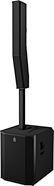

JBL EON715 Powered Loudspeaker
$599.00
- 12 payments of$49.92/mo
- No Credit Check6 payments of$99.83/mo
-


Electro-Voice ZLX-15P-G2 Powered Loudspeaker (1x15")
$649.00
- 12 payments of$54.08/mo
- No Credit Check6 payments of$108.17/mo
-

Electro-Voice ZLX-12P-G2 Powered Loudspeaker (1x12")
$549.00
- 8 payments of$68.63/mo
- No Credit Check6 payments of$91.50/mo
-

Alto Professional TS415 Powered Speaker
$449.00
- 8 payments of$56.13/mo
- No Credit Check6 payments of$74.83/mo
-
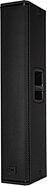
RCF NXL 24-A MK2 Active 2-Way Line Array Column Speaker (2100 Watts)
$2,969.00
- 12 payments of$247.42/mo
-
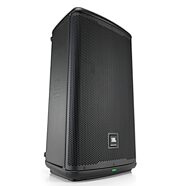
JBL EON712 Powered Loudspeaker
$549.00
- 8 payments of$68.63/mo
- No Credit Check6 payments of$91.50/mo
-
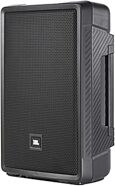
JBL IRX112BT Portable Powered Loudspeaker (1x12")
$485.00
- 8 payments of$60.63/mo
- No Credit Check6 payments of$80.83/mo
-