


Focusrite ISA Two Dual-Channel Microphone Preamplifier
Record two channels with a stunning 80 dB of clean Focusrite gain with the ISA Two microphone preamp, featuring high-end Lundahl LL1538 transformers.
$899.99
- 12 x$75.00
- 8 x$112.50
- No Credit Check6 x$150.00
- No Credit Check4 x$225.00
Focusrite MH443 TwinTrak Pro Platinum Series 2-Channel Preamp/Compressor
No longer available at zZounds


Dual-Mono/Stereo Preamp/Compressor. 24-Bit/96kHz D/A Converter Standard. Mid-Scoop EQ.
Overview
Focusrite MH443 TwinTrak Pro Platimun Series 2-Channel Preamp/Compressor
Designed principally as an affordable, high-specification dual mono/stereo tracking device, TT Pro (as it's affectionately known) also boasts comprehensive latency-free monitoring, unmatched digital connectivity, and all within a sturdy 2U 19" rack-mount chassis.
Each channel features Focusrite's award-winning Platinum preamp, embellished with the option of instant 'air' and variable input impedance for improved microphone performance and extended creativity. A mid-scoop EQ follows, and provides variable frequency and depth of cut for vocal problem solving and miked-up cabinet ambience
In pride of place is TT Pro's powerful dual mono/stereo optical compressor. This optical compressor features Focusrite's custom fast-acting optos, alongside side-chain inputs and the ability to operate as a true 'twinned' stereo pair. These circuit design innovations are complemented by a comprehensive set of focused controls.
TT Pro is the first Platinum to feature a D/A converter as standard, alongside its optional analogue to digital converter. The D/A converter enables the user to feed mono or stereo digital signals into TT Pro. These signals can be fed either into the stereo latency-free monitoring section, or via line inputs (post- the preamp stage) for further processing. The signal can then return to the digital audio workstation via Focusrite's established stereo A/D converter option.
Together, these facilities… read more make TT Pro the perfect analogue interface for any digital audio workstation, and equally the world's first 'hardware plug-in'.
Features
Award-winning Class A discrete transistor-based preamps
Dual mono/stereo optical compressor, featuring custom fast-acting optos
Latency free monitoring with total control over balance, effects, mix and monitor levels
24-bit/192 kHz D/A input card fitted as standard (included), for processing digital signals or feeding digital signals into the monitoring path
24-bit/96kHz A/D output card is optional (sold separately). Both the A/D and the D/A feature wordclock (BNC)
Inductor-induced "Air" opens up high frequencies like an expensive transformer-balanced pre amp
Variable impedance for improved microphone performance and extended creativity
Mid scoop EQ for correcting problematic mid frequencies
Direct inputs on the front fascia for both instruments (Jack) and microphones (XLR)
Post preamp inserts and compressor side-chain inserts, for enhanced processing flexibility
2 ocean blue peak-reading meters, innately beautiful and ideal for catching fast transients
With TwinTrak Pro, Focusrite's fanatical approach to quality design has given birth to twins. read less
Designed principally as an affordable, high-specification dual mono/stereo tracking device, TT Pro (as it's affectionately known) also boasts comprehensive latency-free monitoring, unmatched digital connectivity, and all within a sturdy 2U 19" rack-mount chassis.
Each channel features Focusrite's award-winning Platinum preamp, embellished with the option of instant 'air' and variable input impedance for improved microphone performance and extended creativity. A mid-scoop EQ follows, and provides variable frequency and depth of cut for vocal problem solving and miked-up cabinet ambience
In pride of place is TT Pro's powerful dual mono/stereo optical compressor. This optical compressor features Focusrite's custom fast-acting optos, alongside side-chain inputs and the ability to operate as a true 'twinned' stereo pair. These circuit design innovations are complemented by a comprehensive set of focused controls.
TT Pro is the first Platinum to feature a D/A converter as standard, alongside its optional analogue to digital converter. The D/A converter enables the user to feed mono or stereo digital signals into TT Pro. These signals can be fed either into the stereo latency-free monitoring section, or via line inputs (post- the preamp stage) for further processing. The signal can then return to the digital audio workstation via Focusrite's established stereo A/D converter option.
Together, these facilities… read more make TT Pro the perfect analogue interface for any digital audio workstation, and equally the world's first 'hardware plug-in'.
Features
Award-winning Class A discrete transistor-based preamps
Dual mono/stereo optical compressor, featuring custom fast-acting optos
Latency free monitoring with total control over balance, effects, mix and monitor levels
24-bit/192 kHz D/A input card fitted as standard (included), for processing digital signals or feeding digital signals into the monitoring path
24-bit/96kHz A/D output card is optional (sold separately). Both the A/D and the D/A feature wordclock (BNC)
Inductor-induced "Air" opens up high frequencies like an expensive transformer-balanced pre amp
Variable impedance for improved microphone performance and extended creativity
Mid scoop EQ for correcting problematic mid frequencies
Direct inputs on the front fascia for both instruments (Jack) and microphones (XLR)
Post preamp inserts and compressor side-chain inserts, for enhanced processing flexibility
2 ocean blue peak-reading meters, innately beautiful and ideal for catching fast transients
With TwinTrak Pro, Focusrite's fanatical approach to quality design has given birth to twins. read less
Specs
Mic Input Response
Gain range = 0 dB to 60 dB continuously variable
Input impedance = 50 Ohm to 3K3 Ohmcontinuously variable
EIN = 128 dB measured at 60 dB of gain with 150 Ohm terminating impedance and 20 Hz/22 kHz bandpass filter
THD at minimum gain (0 dB) = 0.0004% measured with +16 dBu input signal and with a 20 Hz/22 kHz bandpass filter
THD at maximum gain (60 dB) = 0.003% measured with a 36 dBu input signal and with a 20 Hz/22 kHz bandpass filter
THD at maximum input level (26.5 dBu) = 0.005% measured with a 20 Hz/22 kHz bandpass filter
Frequency response at minimum gain (0 dB) = flat at 10 Hz and 2 dB down at 200 kHz
Frequency response at maximum gain (60 dB) = 2 dB down at 10 Hz and 200 kHz
CMRR at full gain (60 dB) = 80 dB
Line Input Response
Gain range = -10 dB to +10 dB continuously variable
Input impedance = 10K Ohm from 10 Hz to 200 kHz
Noise at main output with gain set to 0 dB = -94 dBu measured with a 20 Hz/22 kHz bandpass filter
Noise at 10 dBV output with gain at 0 dB = -100 dBu measured with a 20 Hz/22 kHz bandpass filter
Signal to noise ratio relative to max headroom (27 dBu) = 121 dB
Signal to noise ratio relative to 0 dBfs (+22 dBu) = 116 dB
THD at unity gain (0 dB) = 0.0006% measured with 0 dBfs (+22 dBu) input signal and with a 20 Hz/22 kHz bandpass filter
Frequency response at unity gain (0 dB) = 0.1 dB down at 10 Hz and 3 dB down at 200 kHz
Instrument Input Response
Gain range (High Gain switch out) = 0 dB to 20dB continuously variable
Gain range (High Gain switch in) = 20 dB to 40dB continuously variable
Input Impedance = > 1 Meg Ohm
Noise at minimum gain (0 dB) = -90 dBu measured with a 20 Hz/22 kHz bandpass filter
Noise at maximum gain (40 dB) = -78 dBu measured with a 20 Hz/22 kHz bandpass filter
THD at minimum gain (0 dB) = 0.006% measured with 10 dBu input signal and with a 20 Hz/22 kHz bandpass filter
Frequency response at unity gain (0 dB) = 0.5 dB down at 10 Hz and 1 dB down at 200 kHz
Frequency response at maximum gain (40 dB) = 6 dB down at 10Hz and 1dB down at 200KHz
Input Meter
6 LED peak reading meter is calibrated relative to 0 dBfs where 0 dBfs = +22 dBu (the maximum level which can be correctly converted by the optional internal A/D converter before overload occurs). The meter calibration points are as follows:
Meter panel calibration value Equivalent dBu value
0dBfs +22dBu (the maximum level the ADC can convert before digital distortion occurs)
-6dBfs +16dBu
-12dBfs +10dBu
-18dBfs +4dBu (the normal signal level in an analogue system to allow headroom for additional processing such as EQ)
-24dBfs -2dBu
-42dBfs -20dBu
Channel Insert
Unbalanced input and output on balanced (TRS) socket as follows:
Tip = Send (Output)
Ring = Return (Input)
Signal level equivalent to 6dB below normal operating level.
High Pass Filter
Roll off = 12 dB per octave 2 pole filter
Cut off frequency:
-3 dB at 120 Hz
-6 dB at 85 Hz
-12 dB at 56 Hz
Optical Compressor
Threshold hold range = -12 dBfs (10 dBu) to 42 dBfs (-20 dBu).
Compressor ratio (Hard Ratio switch out) = 2.5:1
Compressor ratio (Hard Ratio switch in) = 6:1
Attack time (Slow Attack switch out) = 0.5 ms.
Attack time (Slow Attack switch in) = 5 ms.
Release time = 100 ms to 1 s and then auto release mode when the release knob is turned fully clockwise. Auto release creates a release time dependent upon the average level of the incoming signal.
Noise = -94 dBu measured with a 20 Hz/22 kHz bandpass filter.
Makeup gain = 0 to +21 dB.
Compressor Side-Chain Insert
Can be used to input an independent signal to trigger compression or to allow the side-chain audio to be sent in and out of the unit via an external processor, such as an EQ for frequency conscious compression and de-essing of vocals.
Connector is an unbalanced input and output on balanced (TRS) socket as follows:-
Tip = Send (Output)
Ring = Return (Input)
Signal level equivalent to 6 dB below normal operating level.
Mid Scoop EQ
EQ shape = Peak
Center frequency = Variable between 120 Hz and 2 kHz
Cut (Deep switch out) = -6 dB
Cut (Deep switch in) = -12 dB
Q (Deep switch out) = 1.5
Q (Deep switch in) = 3
FX Send
Unbalanced output, signal level equivalent to -6 dB below normal operating level.
Noise = -94 dBu measured with a 20 Hz/22 kHz bandpass filter.
Maximum output signal level = +20 dBu
FX Return
Balanced input
Operating level = +4 dBu
Headphones Mix
Unbalanced output, signal level equivalent to 6 dB below normal operating level.
Noise = -94 dBu measured with a 20 Hz/22 kHz bandpass filter.
Maximum output signal level = +20 dBu
Monitor Input
Balanced input
Operating level = +4 dBu
Monitor Output
Balanced output
Operating level = +4 dBu
Noise = -98 dBu measured with a 20 Hz/22 kHz bandpass filter and monitor level knob at maximum output level (fully clockwise).
Maximum output signal level = +26 dBu
DAC Performance
Playback sample frequency = 32 kHz to 192 kHz.
Maximum bit depth = 24-bit
Maximum analogue output level = +21 dBu.
Dynamic Range = 111 dB measured with A weighted filter.
Wordclock BNC connector outputs a regenerated wordclock at the sample frequency contained within the SPDIF signal connected to the RCA connector.
Output Meter
Calibrated for 0 dBfs = +22 dBu and indicates the level after the output fader being sent to both the internal AD converter and the TwinTrak Pro XLR output.
O/L LED is lit when any section of the unit (including the headphone output) reaches a level greater than 0 dBfs (O/L: LED triggered at +22.4 dBu).
Weight
5 kg
Dimensions
482 mm (W) x 88 mm (H) x 180 mm (D)
Gain range = 0 dB to 60 dB continuously variable
Input impedance = 50 Ohm to 3K3 Ohmcontinuously variable
EIN = 128 dB measured at 60 dB of gain with 150 Ohm terminating impedance and 20 Hz/22 kHz bandpass filter
THD at minimum gain (0 dB) = 0.0004% measured with +16 dBu input signal and with a 20 Hz/22 kHz bandpass filter
THD at maximum gain (60 dB) = 0.003% measured with a 36 dBu input signal and with a 20 Hz/22 kHz bandpass filter
THD at maximum input level (26.5 dBu) = 0.005% measured with a 20 Hz/22 kHz bandpass filter
Frequency response at minimum gain (0 dB) = flat at 10 Hz and 2 dB down at 200 kHz
Frequency response at maximum gain (60 dB) = 2 dB down at 10 Hz and 200 kHz
CMRR at full gain (60 dB) = 80 dB
Line Input Response
Gain range = -10 dB to +10 dB continuously variable
Input impedance = 10K Ohm from 10 Hz to 200 kHz
Noise at main output with gain set to 0 dB = -94 dBu measured with a 20 Hz/22 kHz bandpass filter
Noise at 10 dBV output with gain at 0 dB = -100 dBu measured with a 20 Hz/22 kHz bandpass filter
Signal to noise ratio relative to max headroom (27 dBu) = 121 dB
Signal to noise ratio relative to 0 dBfs (+22 dBu) = 116 dB
THD at unity gain (0 dB) = 0.0006% measured with 0 dBfs (+22 dBu) input signal and with a 20 Hz/22 kHz bandpass filter
Frequency response at unity gain (0 dB) = 0.1 dB down at 10 Hz and 3 dB down at 200 kHz
Instrument Input Response
Gain range (High Gain switch out) = 0 dB to 20dB continuously variable
Gain range (High Gain switch in) = 20 dB to 40dB continuously variable
Input Impedance = > 1 Meg Ohm
Noise at minimum gain (0 dB) = -90 dBu measured with a 20 Hz/22 kHz bandpass filter
Noise at maximum gain (40 dB) = -78 dBu measured with a 20 Hz/22 kHz bandpass filter
THD at minimum gain (0 dB) = 0.006% measured with 10 dBu input signal and with a 20 Hz/22 kHz bandpass filter
Frequency response at unity gain (0 dB) = 0.5 dB down at 10 Hz and 1 dB down at 200 kHz
Frequency response at maximum gain (40 dB) = 6 dB down at 10Hz and 1dB down at 200KHz
Input Meter
6 LED peak reading meter is calibrated relative to 0 dBfs where 0 dBfs = +22 dBu (the maximum level which can be correctly converted by the optional internal A/D converter before overload occurs). The meter calibration points are as follows:
Meter panel calibration value Equivalent dBu value
0dBfs +22dBu (the maximum level the ADC can convert before digital distortion occurs)
-6dBfs +16dBu
-12dBfs +10dBu
-18dBfs +4dBu (the normal signal level in an analogue system to allow headroom for additional processing such as EQ)
-24dBfs -2dBu
-42dBfs -20dBu
Channel Insert
Unbalanced input and output on balanced (TRS) socket as follows:
Tip = Send (Output)
Ring = Return (Input)
Signal level equivalent to 6dB below normal operating level.
High Pass Filter
Roll off = 12 dB per octave 2 pole filter
Cut off frequency:
-3 dB at 120 Hz
-6 dB at 85 Hz
-12 dB at 56 Hz
Optical Compressor
Threshold hold range = -12 dBfs (10 dBu) to 42 dBfs (-20 dBu).
Compressor ratio (Hard Ratio switch out) = 2.5:1
Compressor ratio (Hard Ratio switch in) = 6:1
Attack time (Slow Attack switch out) = 0.5 ms.
Attack time (Slow Attack switch in) = 5 ms.
Release time = 100 ms to 1 s and then auto release mode when the release knob is turned fully clockwise. Auto release creates a release time dependent upon the average level of the incoming signal.
Noise = -94 dBu measured with a 20 Hz/22 kHz bandpass filter.
Makeup gain = 0 to +21 dB.
Compressor Side-Chain Insert
Can be used to input an independent signal to trigger compression or to allow the side-chain audio to be sent in and out of the unit via an external processor, such as an EQ for frequency conscious compression and de-essing of vocals.
Connector is an unbalanced input and output on balanced (TRS) socket as follows:-
Tip = Send (Output)
Ring = Return (Input)
Signal level equivalent to 6 dB below normal operating level.
Mid Scoop EQ
EQ shape = Peak
Center frequency = Variable between 120 Hz and 2 kHz
Cut (Deep switch out) = -6 dB
Cut (Deep switch in) = -12 dB
Q (Deep switch out) = 1.5
Q (Deep switch in) = 3
FX Send
Unbalanced output, signal level equivalent to -6 dB below normal operating level.
Noise = -94 dBu measured with a 20 Hz/22 kHz bandpass filter.
Maximum output signal level = +20 dBu
FX Return
Balanced input
Operating level = +4 dBu
Headphones Mix
Unbalanced output, signal level equivalent to 6 dB below normal operating level.
Noise = -94 dBu measured with a 20 Hz/22 kHz bandpass filter.
Maximum output signal level = +20 dBu
Monitor Input
Balanced input
Operating level = +4 dBu
Monitor Output
Balanced output
Operating level = +4 dBu
Noise = -98 dBu measured with a 20 Hz/22 kHz bandpass filter and monitor level knob at maximum output level (fully clockwise).
Maximum output signal level = +26 dBu
DAC Performance
Playback sample frequency = 32 kHz to 192 kHz.
Maximum bit depth = 24-bit
Maximum analogue output level = +21 dBu.
Dynamic Range = 111 dB measured with A weighted filter.
Wordclock BNC connector outputs a regenerated wordclock at the sample frequency contained within the SPDIF signal connected to the RCA connector.
Output Meter
Calibrated for 0 dBfs = +22 dBu and indicates the level after the output fader being sent to both the internal AD converter and the TwinTrak Pro XLR output.
O/L LED is lit when any section of the unit (including the headphone output) reaches a level greater than 0 dBfs (O/L: LED triggered at +22.4 dBu).
Weight
5 kg
Dimensions
482 mm (W) x 88 mm (H) x 180 mm (D)
Documents and Manuals
For support or warranty questions, please contact the manufacturer:
Phone: 310-322-5500
Web: https://support.focusrite.com/
Phone: 310-322-5500
Web: https://support.focusrite.com/
Reviews
Reviewers gave this product an overall rating of 3.5 out of 5 stars.
(22 ratings)
Submitted January 8, 2005 by a customer from grooveyorkcity.com
"FOCUSRITE VALUE & SOUND (but not necessarily quality) for a nice price."
Verified Customer
zZounds has verified that this reviewer made a purchase from us.
Time will tell. if the new unit holds up, i'm sure it will always be useful in my studio or for off-site applications. another engineer i know totes his around in a portable rack case and takes it with him everywhere.
Sound
It sounds really nice, the preamps are top quality, and instruments as well as mics sound nice and full through it. The mid eq sweep does a nice job of removing unwanted 'rumble' in the low-mid range that you get with mic'ing acoustic guitars and such. The compressor is nice and relatively transparent.
Features
Happy with the features, since I knew what i was paying for, and had researched the item before hand. Like other people have said, a little more in the eq dept. as well as an adjustable 'attack' for the compression would have been nice, but i guess the unit was designed to be more plug and go than the average compressor.
Quality
This is where the product DOES NOT shine. Like someone else mentioned, the second preamp was shot and some of the knobs felt shaky right out of the box. I am now awaiting a replacement unit. The unit looks and feels solid, but it is obvious that outsourcing stuff to ROC really diminshes the quality reputation of an otherwise awesome company. Sometimes, you just gotta keep it in house.
Value
I will still give this unit high marks for value, as you can't get 2 focusrite pres, eq, and direct monitoring for… read more this price anywhere. it's a great value for small studios nonetheless. just pray you get one that works.
Manufacturer Support
I did not deal directly with focusrite on this one, only with Zzounds. I'm not 100% thrilled with their support; they basically said, 'well it's a blem unit, so you can either contact focusrite or pay more for a good unit' (a 'good' unit? I thought this was functionally good)?. Whatever - at least shipping was free.
The Wow Factor
it looks damn cool, gotta say. blue backlit VU meters and a brushed steel face make it the coolest looking thing I own. the only thing cooler is the focusrite red, if you can afford it.
Musical Background:
Active Musician, home studio owner.
Musical Style:
Acid Jazz read less
Sound
It sounds really nice, the preamps are top quality, and instruments as well as mics sound nice and full through it. The mid eq sweep does a nice job of removing unwanted 'rumble' in the low-mid range that you get with mic'ing acoustic guitars and such. The compressor is nice and relatively transparent.
Features
Happy with the features, since I knew what i was paying for, and had researched the item before hand. Like other people have said, a little more in the eq dept. as well as an adjustable 'attack' for the compression would have been nice, but i guess the unit was designed to be more plug and go than the average compressor.
Quality
This is where the product DOES NOT shine. Like someone else mentioned, the second preamp was shot and some of the knobs felt shaky right out of the box. I am now awaiting a replacement unit. The unit looks and feels solid, but it is obvious that outsourcing stuff to ROC really diminshes the quality reputation of an otherwise awesome company. Sometimes, you just gotta keep it in house.
Value
I will still give this unit high marks for value, as you can't get 2 focusrite pres, eq, and direct monitoring for… read more this price anywhere. it's a great value for small studios nonetheless. just pray you get one that works.
Manufacturer Support
I did not deal directly with focusrite on this one, only with Zzounds. I'm not 100% thrilled with their support; they basically said, 'well it's a blem unit, so you can either contact focusrite or pay more for a good unit' (a 'good' unit? I thought this was functionally good)?. Whatever - at least shipping was free.
The Wow Factor
it looks damn cool, gotta say. blue backlit VU meters and a brushed steel face make it the coolest looking thing I own. the only thing cooler is the focusrite red, if you can afford it.
Musical Background:
Active Musician, home studio owner.
Musical Style:
Acid Jazz read less
3 of 4 people (75%) people found this review helpful. Did you?
Thanks for your opinion!
No longer available at zZounds

This is a carousel with product cards. Use the previous and next buttons to navigate.
People who bought this item also bought
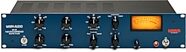
Warm Audio WA-1B All-Tube Optical Compressor
$1,199.00
- 18 x
- 12 x$99.92
- 8 x$149.88
- No Credit Check6 x$199.83
- No Credit Check4 x$299.75
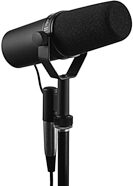
Shure SM7B Dynamic Cardioid Studio Vocal Microphone
$359.00
- 8 x$44.88
- No Credit Check6 x$59.83
- No Credit Check4 x$89.75
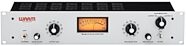
Warm Audio WA-2A Optical All-Tube Audio Compressor
$949.00
- 12 x$79.08
- 8 x$118.63
- No Credit Check6 x$158.17
- No Credit Check4 x$237.25

Focusrite Scarlett 18i20 3rd Gen USB Audio Interface
$599.99
- 12 x$50.00
- 8 x$75.00
- No Credit Check6 x$100.00
- No Credit Check4 x$150.00
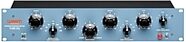
Warm Audio EQP-WA Classic Passive Tube Equalizer
$799.00
- 12 x$66.58
- 8 x$99.88
- No Credit Check6 x$133.17
- No Credit Check4 x$199.75

ART Pro VLA II 2-Channel Compressor
$449.99
- 8 x$56.25
- No Credit Check6 x$75.00
- No Credit Check4 x$112.50
Warm Audio WA-8000 Large-Diaphragm Tube Condenser Microphone
$1,199.00
- 18 x
- 12 x$99.92
- 8 x$149.88
- No Credit Check6 x$199.83
- No Credit Check4 x$299.75
Warm Audio WA76 Limiting Amplifier Discrete Compressor
$699.00
- 12 x$58.25
- 8 x$87.38
- No Credit Check6 x$116.50
- No Credit Check4 x$174.75

Warm Audio Bus-Comp Analog VCA Compressor
$799.00
- 12 x$66.58
- 8 x$99.88
- No Credit Check6 x$133.17
- No Credit Check4 x$199.75
