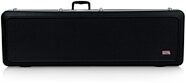
Silvertone LB11 Electric Bass Package
No longer available at zZounds
zZounds Gear Experts Say...
The Silvertone LB11 bass package is a great first step for bassists. It includes a bass, amp, cables, and everything else a beginning player needs.
Overview
Are you ready to embark on your own musical journey? You're going to need a comfortable, playable bass guitar, a portable practice amp, and some helpful accessories to tie it all together. That's where Silvertone comes in. Their electric bass package has everything you need to unlock the mysteries of low-end tone. After that, it comes down to disciplined practice, creative experimentation, and nerves of cold steel. Actually, you don't really need nerves of cold steel. Leave the drama to your frontman.
The Revolver Bass
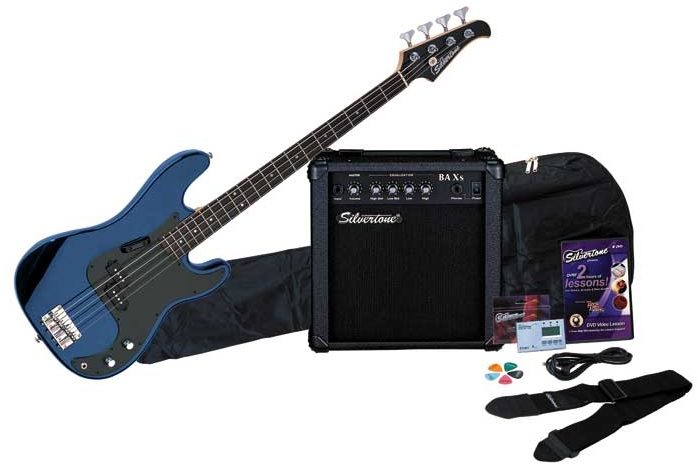
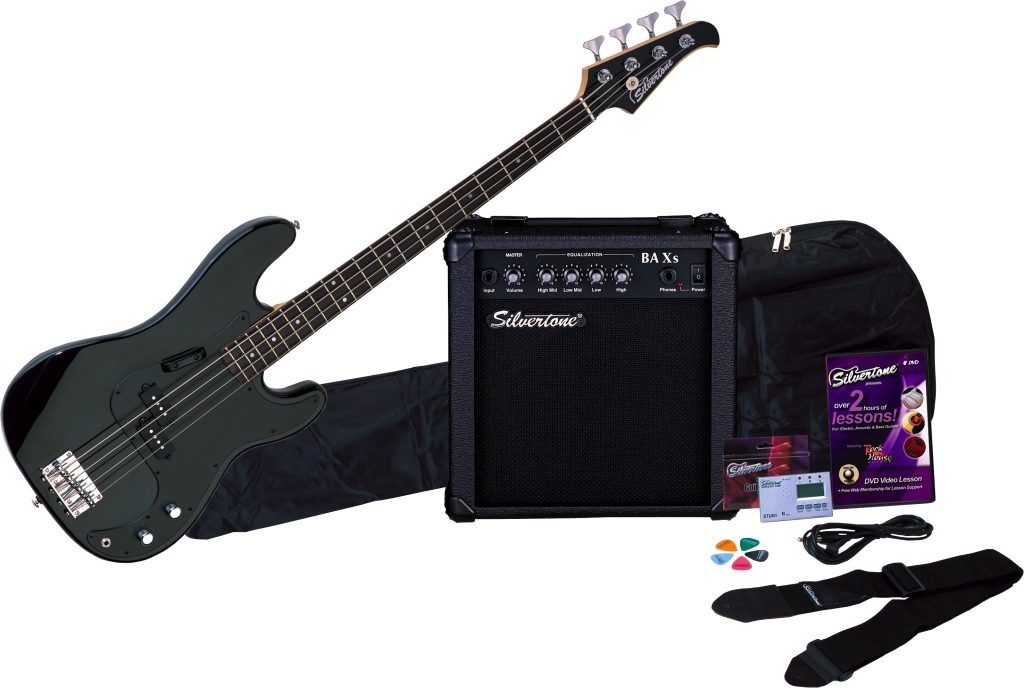
To get you started, the Silvertone LB11 pack comes with the Revolver four-string bass. The traditional Precision-style neck, body, and pickups provide comfortable balance, warm resonance, and fat tone. With three colors to choose from, there's a Revolver to fit any style. Modern Rock & Rollers will dig the Cobalt Blue, and old-school R&B cats will appreciate the Sunburst finish. These colors probably aren't tuff-enough for the Metal-heads, but they'll find the Liquid Black version looks pretty menacing.Easy-To-Use Controls
As a beginner, you'll want to start simple. The Silvertone LB11 Revolver's stripped-down controls let you dial-up some nice sounds without any unnecessary complications. Use the volume knob to adjust the amount of signal sent out of your bass, and the tone knob to change the color of that signal. Roll the tone back for a round, thumpy sound, or bring it forward for a pointy, bright attack.A Solid Practice Amp
Of course, all… read more that good tone is wasted if you can't hear it. You'll need an amplifier to boost the sound of your bass. Say hello to the BAXs bass amp, included in the LB11 package. This amp is perfect for beginners, for a couple of reasons. First, you'll probably be taking lessons somewhere. Since the BAXs is small and portable, you can bring it to class and get the exact same sound as when you practice at home. Second, it's not very loud. This may not seem like a benefit, but your friends and family would disagree. As with any musical instrument, your first few sessions are going to be pretty rough around the edges. Fortunately, there's a built-in headphone jack to keep the sound to yourself, when necessary. Once you've ironed-out the biggest wrinkles, you can get a bigger amp, crank it up, and play some gigs. Until then, this amp will take care of you.Included Accessories
Most beginning musicians aren't sure what accessories they really need, but the Silvertone LB11 package removes all the guesswork. You get a handy gig bag to protect your bass as you carry it from place to place, and a cable to plug your Revolver into the amp. There's also a nylon strap for when you want to rock standing-up. Sling it down low, Ramones-style, or cinch it way up high like the Jazz-nerds do. As long as it's comfortable for you. The included tuner will keep you on-pitch, which is one of the most important skills a beginner bassist can learn. You can't know for sure if you're doing it right unless your instrument is in tune.To Pick, or Not
Bass purists will tell you, "real bass players" only use their fingers. Still, there are plenty of groove-meisters out there who use a pick. It's not really about speed; you'll be able to get busy either way, with some practice. Picked strings produce a tight, crisp sound that you can't really duplicate by playing fingerstyle, though. Pluck way back by the bridge, and you'll hear the difference. Use your fingers, then give the included picks a try, and decide which you prefer. Better yet, master both techniques so you can add the right character to any song. Finally, the Silvertone LB11 includes an instructional DVD with over two hours of music lessons. Pop it in your DVD player and jam along. There's no substitute for a good teacher, but these exercises will help strengthen your hands and increase your musical knowledge. With some effort and patience, you'll soon be building your own unforgettable bass lines! read lessSpecs
Includes:
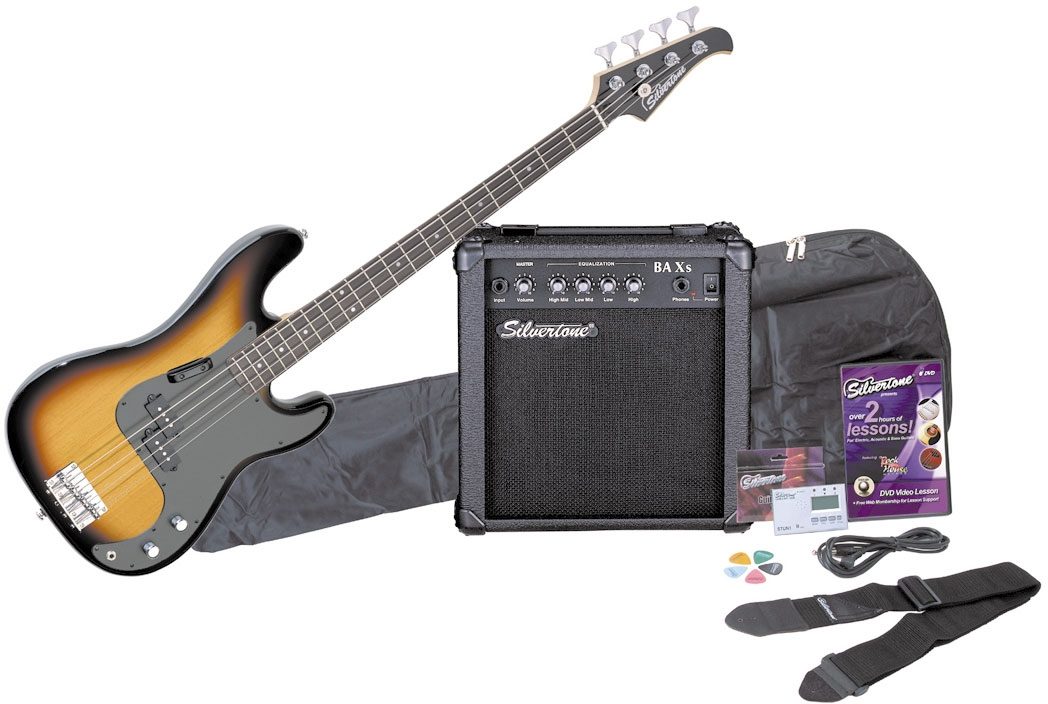
- LB11 bass guitar (sunburst), BAXs bass amp, gig bag, electronic tuner, guitar picks, guitar strap, cable, instructional DVD
- Bass guitar package with everything you need to control the rhythm
- Includes BAXs bass amp, digital tuner, instructional DVD, strings, strap, picks, cable, gig bag
- Revolver LB11 bass guitar offers comfortable balance, warm resonance, and fat tone
- BAXs bass amp with 10-watt RMS power, 6.5-inch speaker, 4-band EQ
- Guitar backed by limited lifetime warranty
- LB11 bass guitar (sunburst), BAXs bass amp, gig bag, electronic tuner, guitar picks, guitar strap, cable, instructional DVD
- Bass guitar package with everything you need to control the rhythm
- Includes BAXs bass amp, digital tuner, instructional DVD, strings, strap, picks, cable, gig bag
- Revolver LB11 bass guitar offers comfortable balance, warm resonance, and fat tone
- BAXs bass amp with 10-watt RMS power, 6.5-inch speaker, 4-band EQ
- Guitar backed by limited lifetime warranty
Silvertone's Description
Silvertone LB11 Electric Bass Package
The Silvertone Bass Package comes with everything you need. Featuring the Silvertone SSLB-11 "Precision" style 4-string bass (34" long scale, 20 fret Maple neck with Rosewood fretboard, 1 split "P" style pickup, 1 volume and 1 tone control, chrome die-cast enclosed tuning machines, fully adjustable chrome bridge), the Silvertone Bass package also includes the BA-10 bass amp (10 watts RMS, 7" bass driver, 3-band EQ, headphone jack), GT-8 tuner, gig bag, strap, cable, pickpack, and instructional DVD.Reviews
Reviewers gave this product an overall rating of 4.5 out of 5 stars.
(1235 ratings)
Submitted March 30, 2009 by a customer from gmail.com
"Best Bang for your Buck"
Verified Customer
zZounds has verified that this reviewer made a purchase from us.
overall its awesome
Sound
The sound is exactly like a P-bass for a lot less, you can get a wide range of sounds out of this thing after you play with the amp a little, also when the tone knob is turned up you get a reasonable amount of static from the amp.
Features
Standard p-bass setup- one volume and one tone knob, doesnt give you a whole lot to fool around with but thats what effects pedals are for
You wont use the accessories really.
Ease of Use
This bass has a fast neck and is nice and light a very playable bass for beginners.
Quality
This thing is built like a rock, its been tossed around and fallen, and it hasnt broke a thing. The finish is spotless
Value
No other deal like it
Manufacturer Support
Ive never had to deal with them
The Wow Factor
I got the sunburst and maybe its just the sheer fact its an instrument but a ton of girls have come up to me wanting to touch it.
Musical Background:
Hobbyist
Musical Style:
Rock Alt, JAzz
77 of 79 people (97%) people found this review helpful. Did you?
Thanks for your opinion!
No longer available at zZounds
In most cases, a product is unavailable because it has been discontinued by the manufacturer